
Veronica topiaria
Veronica topiaria
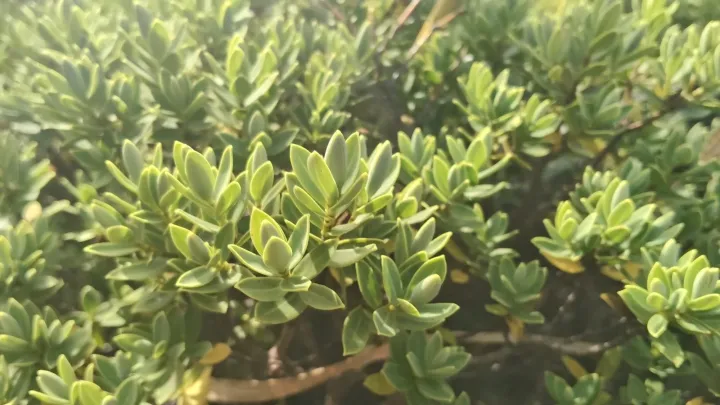
Description
Growing requirements
Veronica topiaria, commonly referred to as Hebe topiaria, is a dense, evergreen shrub belonging to the Plantaginaceae family. It is native to the alpine regions of New Zealand's South Island, where it thrives in rocky soils and open, well-drained environments.
The plant is highly valued for its natural, topiary-like growth habit, characterized by small, grey-green leaves with white margins that create a neat, rounded structure. It is a slow-growing species, making it an excellent choice for rock gardens and formal garden borders.
This species requires full sun to partial shade to maintain its compact shape. Soil conditions must be exceptionally well-drained; heavy clay soils should be amended with organic matter and grit to prevent moisture retention that can damage the root system.
Regarding climate, Veronica topiaria prefers temperate zones with cool, moist summers and mild winters. It is not fully frost-hardy in severe conditions and often requires container cultivation or specialized protection in regions where temperatures drop significantly below freezing.
Maintenance involves routine watering during dry spells and light pruning in late spring to maintain the desired shape and density. Minimal fertilizing is usually sufficient, as the plant is adapted to nutrient-poor alpine soils.
Main diseases and pests
Root rot caused by Phytophthora species is the most common threat, usually triggered by poor drainage or overwatering. Maintaining a well-aerated soil structure is the primary defense strategy for growers.
Pest issues frequently include aphids and scale insects, which settle on the stems and leaf undersides. These can be managed through biological control agents or targeted application of insecticidal soaps.
Fungal infections such as powdery mildew may develop if there is insufficient air movement around the plant. Spacing plants adequately and avoiding overhead watering helps to keep foliage dry and healthy.
Frost damage can compromise the plant's health, making it susceptible to secondary bacterial infections. Protecting the shrub with permeable horticultural fleece during deep freezes is highly recommended.
Leaf spots caused by various pathogens may appear under conditions of extreme humidity. Regular removal of fallen debris from around the base of the plant reduces the potential for spore survival and reinfection.