
Veronica triphyllos
Veronica triphyllos
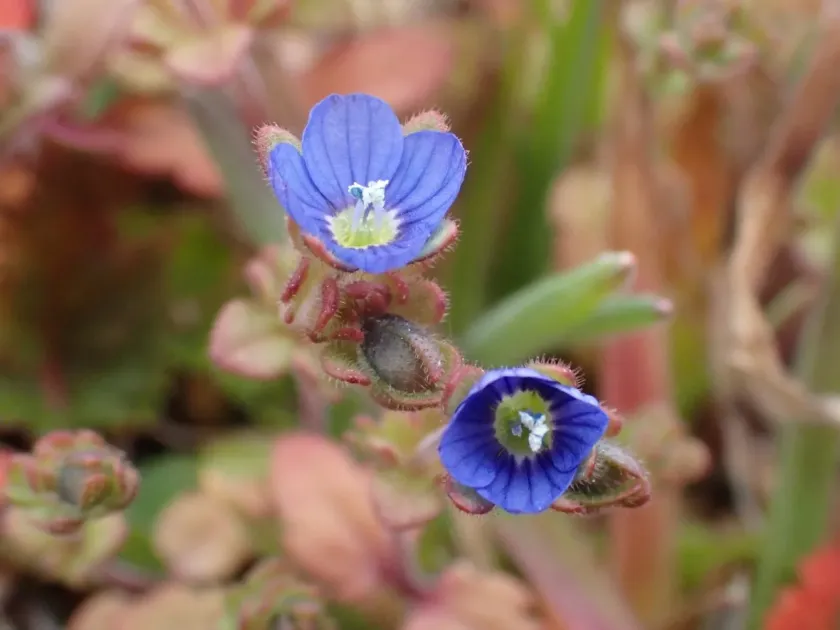
Description
Sowing dates
The species reproduces exclusively via seeds. Seeds exhibit a flexible germination window, which can occur during both autumn and spring. This variability makes it a persistent weed in crop rotations that include both winter and spring sown varieties.
Growing requirements
Veronica triphyllos, commonly known as finger speedwell, is an annual plant belonging to the Plantaginaceae family. In agricultural practices, it is classified as a significant weed species that invades winter and spring cereal crops, reducing overall field efficiency.
The plant is native to Europe, parts of Asia, and North Africa. It is well-adapted to sandy, light-textured soils. It is frequently observed in arable fields, fallow lands, and along roadsides, thriving in open habitats where competition for soil resources can be managed.
Botanically, it is characterized by its palmately-lobed leaves (divided into three parts) and small, deep-blue flowers. The plant is typically short, rarely exceeding 20 cm in height, and is covered with glandular hairs, which help it withstand dry conditions.
As an ephemeral species, Veronica triphyllos completes its life cycle very rapidly. This biological strategy allows it to utilize early-season moisture and nutrients, placing it in direct competition with emerging seedlings of major agricultural crops.
In terms of agricultural impact, the plant is viewed as a nuisance that competes for light, water, and nutrients. While it may not dominate fields like some invasive grasses, its early appearance can weaken young crops, leading to uneven stands and reduced final yields.
Main diseases and pests
Effective control requires a multi-faceted agronomic approach. Deep plowing and thorough stubble cultivation are essential mechanical methods for destroying seedlings before they can establish deep root systems and set new seeds for the following season.
Chemical control involves the application of selective herbicides during the early vegetative stages of the weed. Identifying the weed at the seedling stage is critical, as later growth stages make the plant more tolerant to standard herbicide doses.
Finger speedwell can act as a secondary host for several crop pests and fungal pathogens. By maintaining clean field margins and implementing weed-free buffer zones, farmers can reduce the risk of transferring these biological threats to the main crop.
Seed purity is a major factor in preventing the spread of Veronica triphyllos to new fields. Modern grain cleaning and sorting technologies should be employed to ensure that planting material is free from weed seed contamination.
Finally, promoting rapid crop canopy closure is an effective biological suppression method. A healthy, dense crop stand effectively limits light availability, which significantly hampers the growth and development of the light-dependent finger speedwell.