
Veronica tenuifolia
Veronica tenuifolia
Description
Growing requirements
Veronica tenuifolia is a perennial herbaceous plant belonging to the Plantaginaceae family. It is recognized for its refined, delicate foliage and is naturally adapted to habitats that are typically rocky, well-drained, and exposed to significant levels of direct sunlight.
Regarding soil requirements, the species thrives in impoverished, stony, or sandy environments. It is essential to ensure that the site provides excellent drainage, as the plant is highly susceptible to root damage caused by waterlogging, which is common in heavy, clay-rich soil conditions.
The agronomic maintenance of this plant is relatively low, focusing primarily on controlling moisture levels and ensuring that the plant receives adequate exposure to sunlight. Its drought tolerance is a notable feature, making it suitable for xeriscaping and areas where intensive irrigation is not feasible or desired.
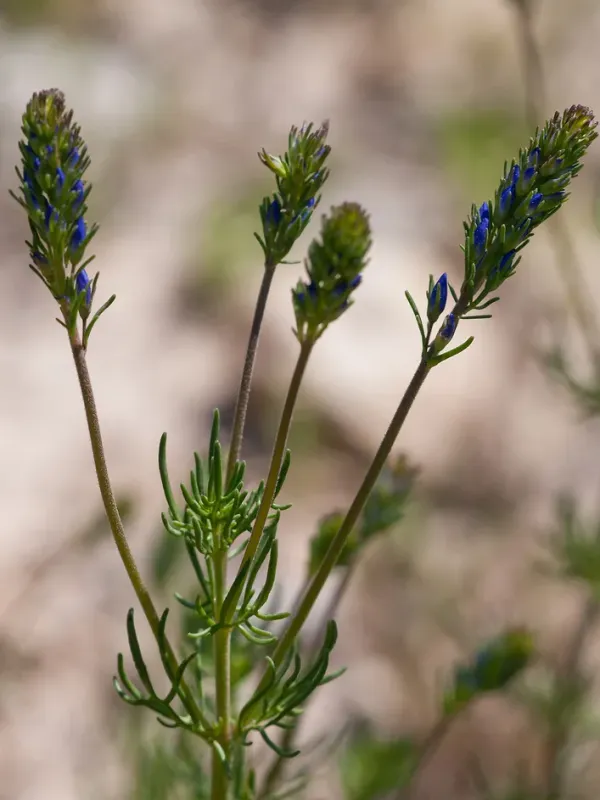
Botanically, Veronica tenuifolia displays narrow, linear leaves arranged along slender stems, giving the plant an elegant appearance. The inflorescence consists of spikes or racemes of small, tubular flowers that predominantly feature shades of blue to violet, appearing during the peak of the growing season to provide high visual impact.
In terms of practical application, this plant is primarily utilized in horticulture and landscape architecture. It is an excellent choice for rock gardens, gravel beds, and borders, where its naturalistic aesthetic and ability to fill crevices make it a valuable asset for creating sustainable, low-maintenance garden designs.