
Petiveria
Petiveria
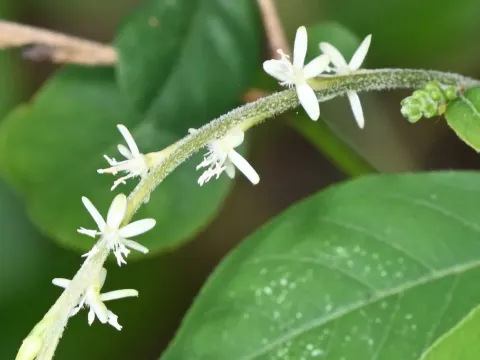
Petiveria (Petiveria alliacea) is a perennial herb belonging to the Phytolaccaceae family. It is primarily propagated through seeds or stem cuttings in warm, tropical climates where it thrives naturally.
What the section contains
Petiveria
When planting, seeds should be sown in a light, well-draining substrate enriched with organic matter. Germination typically requires a constant temperature between 22 and 26 degrees Celsius.
Seedlings develop slowly, so maintaining high humidity and protecting them from strong winds during the early stages of growth is essential for survival and establishment.
Spacing is a critical factor in agricultural management; plants should be spaced at least 60 centimeters apart to allow for proper air circulation and expansion of the root system.
Transplanting seedlings to the field should occur after the soil has warmed sufficiently, ensuring that the young plants are hardened off to withstand outdoor conditions.
Petiveria prefers full sun to light shade and requires deep, fertile soil with a slightly acidic to neutral pH. It is highly sensitive to waterlogging, which often leads to root damage.
Regular irrigation is necessary to maintain soil moisture, especially during dry spells, as the plant does not possess strong drought-tolerance mechanisms.
The crop thrives in high-temperature environments. Exposure to temperatures below 10 degrees Celsius can cause significant growth stunting and may kill the plant if it lasts for an extended period.
Organic fertilization is highly recommended to improve soil structure and provide the necessary nutrients for the development of both the biomass and the root system.
In addition to sunlight and water, maintaining clean soil by suppressing weeds during the first months of growth is vital for achieving optimal plant height and density.
The yield of Petiveria is determined by the harvestable biomass, consisting of leaves and roots, which serve as the primary materials for pharmaceutical and herbal extract production.
Leaf harvesting can be performed multiple times throughout the growing season, provided that the main plant structure is maintained to ensure continuous regeneration.
Root harvesting is usually conducted after the second or third year of growth, as this is when the concentration of key bioactive compounds is typically at its highest.
The total yield per hectare is significantly influenced by agricultural practices such as periodic pruning, nutrient management, and systematic irrigation.
- Proper management of plant height through pruning increases the number of branches and overall leaf production capacity.
Common pests include aphids and spider mites, which can infest the plant foliage, especially in environments with poor ventilation or improper moisture levels.
Root-knot nematodes are considered a major threat, potentially damaging the roots and reducing the plant's ability to absorb water and essential nutrients from the soil.
Fungal infections like leaf spot and powdery mildew can arise if there is excessive moisture on the leaves combined with high humidity, necessitating preventative measures.
Integrated pest management, focusing on biological controls rather than harsh synthetic chemicals, is essential for maintaining the quality of the raw material.
Regular monitoring of field conditions and early detection of symptoms are the most effective ways to manage threats and protect the long-term health of the crop.
Harvesting of the foliage involves cutting stems at a height that allows the plant to continue growing, typically around 15–20 centimeters from the ground level.
Post-harvest, the leaves are dried in controlled conditions, away from direct sunlight, to prevent the degradation of essential oils and other active chemical constituents.
Roots are extracted at the end of the growth cycle; they must be thoroughly washed to remove soil and debris before undergoing the drying process.
Standardized processing protocols are applied to both leaves and roots to ensure the purity and quality of the final herbal product destined for the market.
Properly dried and processed materials should be stored in cool, dry, and dark environments to maintain their potency and prevent microbial contamination.