
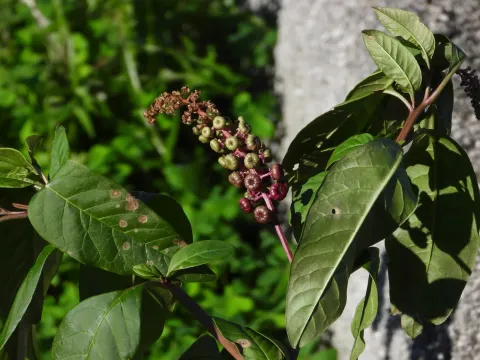
Pokeweed
Phytolacca L.
Pokeweed (Phytolacca) is typically propagated by seeds, which should be sown in late autumn or early spring. Stratification is recommended for improved germination rates, especially for older seeds stored for a long time.
What the section contains

Pokeweed
When starting indoors, seeds are planted in trays in early spring. They require a shallow planting depth of about 1.5 to 2 centimeters to ensure adequate light exposure for sprouting.
Germination is often uneven and slow, taking several weeks to complete. Maintaining consistent moisture in the potting mix is crucial during this initial phase of development.
Transplanting to the final location takes place after the last frost date. Seedlings should be hardened off gradually to acclimatize them to outdoor wind and solar radiation levels.
Spacing is a critical factor for healthy growth. Plants should be placed 80 to 100 centimeters apart, allowing sufficient space for their massive fleshy root systems and large foliage to develop.
Pokeweed belongs to the Phytolaccaceae family and is a vigorous perennial plant with a fleshy, deep taproot. It is native to tropical and temperate regions, showing high adaptability to varying climates.
The plant thrives in full sun but can tolerate partial shade, provided it receives sufficient light for its metabolic processes. Deep shade may cause the plant to become weak and leggy.
Rich, well-draining soil with a neutral to slightly acidic pH is ideal for cultivation. The plant is adaptable but performs best in loamy soils that are high in organic matter.
Water requirements are moderate; however, the plant dislikes waterlogged conditions. Excessive standing water can quickly lead to root rot and eventual death of the perennial structure.
Regular maintenance involves weed control and keeping the soil loose. Because the plant is quite competitive, it generally suppresses nearby weeds once it reaches full maturity.
Pokeweed is utilized for both medicinal purposes and as a source of natural dyes. The roots are the primary part harvested for herbal applications, requiring careful drying and storage.
Productivity increases as the root system ages, typically peaking in the third or fourth year of life. Harvesting of roots is best performed in the autumn when the top foliage dies back.
The berries are also harvested at full ripeness, usually in late summer. They are primarily used for their intense pigments, which are valued in traditional food coloring and industrial dye applications.
Due to the plant's high toxicity, all harvesting activities must be performed using protective gloves. Processing requires thorough knowledge of plant safety protocols to prevent accidental poisoning.
In ornamental settings, the plant provides a high yield of aesthetic value, characterized by its rapid growth rate and dramatic presence in garden borders.
Slugs and snails are the most common pests, often consuming the tender leaves of young plants early in the growing season. Physical barriers are often effective for control.
Root rot caused by fungi such as Phytophthora is a major threat in poorly drained soils. Improving soil structure and avoiding over-irrigation are key preventive measures.
Aphids may infest the flower spikes during hot, dry periods. While usually not fatal, severe infestations can stunt development and lower the overall quality of the berry harvest.
Powdery mildew can affect the leaves during humid conditions with poor air circulation. Proper spacing between plants significantly reduces the humidity levels around the foliage.
Viral infections can result in stunted growth and leaf curling. Since there are no chemical cures for these viruses, removing and destroying infected plants is essential to prevent spread.