
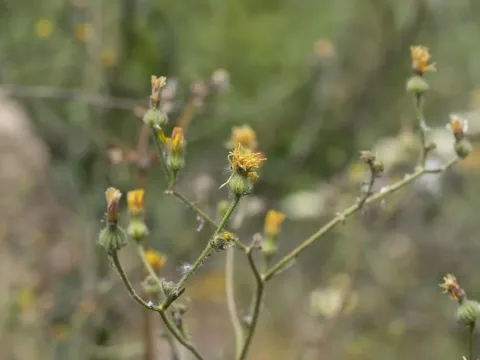
Picris sprengeriana
Picris sprengeriana
Picris sprengeriana belongs to the Asteraceae family. This species is gaining interest as a forage crop due to its unique growth patterns and resilience in specific climates.
What the section contains
Picris sprengeriana
The sowing process begins in early spring when the soil temperature consistently reaches levels that support rapid germination and seed establishment.
Precision planting is recommended, as seeds should be placed at shallow depths to ensure that emerging seedlings can easily reach the soil surface for photosynthesis.
Row spacing should be calibrated based on the specific equipment used, allowing for adequate light penetration and space for subsequent weed control operations.
Maintaining a steady moisture level in the seedbed is crucial during the first two weeks post-planting to guarantee uniform crop emergence across the field.
This crop thrives in well-lit environments and requires full exposure to sunlight throughout the growing season to reach its maximum biomass potential.
Soil quality is a critical factor; Picris sprengeriana prefers well-draining, moderately fertile soils and avoids heavy clay substrates that tend to waterlog.
Climate adaptability allows it to grow in various temperate regions, though it performs best in areas with moderate rainfall and limited extreme heat events.
The agronomic management includes regular monitoring of soil nitrogen levels to support leaf growth, as the plant responds well to balanced fertility programs.
Effective air circulation within the field is necessary to minimize the risk of microclimates that might encourage unwanted fungal activity on the foliage.
Powdery mildew represents a primary threat, particularly in regions where humidity levels remain high for extended periods, potentially impacting crop health.
Root rot caused by poor soil drainage can severely damage the root system, making it essential to prioritize fields with optimal topographic characteristics.
Aphids and other sap-sucking insects are common pests that may feed on the tender young leaves, requiring scouting and targeted intervention if populations exceed thresholds.
Crop rotation protocols should be strictly followed to prevent the buildup of soil-borne pathogens and ensure that the soil remains productive for subsequent years.
Integrated pest management strategies are recommended to reduce reliance on chemical inputs while maintaining the overall health and safety of the crop.