
Pilgerodendron
Libocedrus uvifera
Pilgerodendron uviferum, commonly known as the Patagonian cypress, is a monotypic genus in the Cupressaceae family. It is a slow-growing evergreen conifer native to the southern regions of South America.
What the section contains
Pilgerodendron
This species is uniquely adapted to high-rainfall environments and cool climates. It frequently thrives in swampy areas and peat bogs, demonstrating a remarkable tolerance for waterlogged soils.
The cultural requirements include acidic, moisture-retentive soil conditions. Unlike most conifers that require excellent drainage, this species performs well in soils where moisture levels remain consistently high.
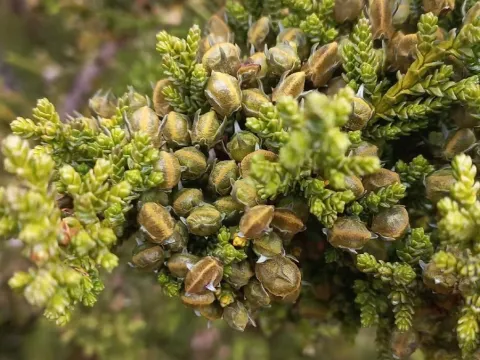
Botanically, the tree is characterized by scale-like leaves arranged in four rows, which protect the plant from harsh winds and dehydration in its native habitat. It maintains a columnar or conical shape as it ages.
In cultivation, it requires protection from extreme heat and direct, harsh sunlight during its juvenile stage. Proper spacing is essential to ensure adequate airflow and to prevent fungal issues.
The wood of the Patagonian cypress is highly prized for its durability and exceptional resistance to decay. Historically, it was used for construction, fencing, and shingles in wet coastal areas.
Due to the extremely slow growth rate of the species, large-scale harvesting is not sustainable. Current agricultural focus is primarily on conservation and small-scale silviculture.
Seed collection involves gathering mature cones before they disperse their seeds. The seeds require a cold stratification period to break dormancy and ensure uniform germination in nursery settings.
In modern silviculture, the tree is valued for its potential in reforestation projects in high-rainfall mountain areas. Proper management of young stands is necessary to ensure survival against weeds.
Harvesting for ornamental use is restricted to specialized nursery stock intended for collectors and botanical gardens interested in unique, cold-hardy coniferous plants.
The primary environmental threat is the alteration of soil moisture regimes, specifically drainage of peatlands, which directly impacts the growth cycles and health of the species.
In nursery settings, over-fertilization can lead to weak growth, making the plants more susceptible to opportunistic pathogens. A balanced, slow-release fertilizer is recommended for optimal health.
Fungal pathogens such as Phytophthora species represent a significant threat to root health if the planting site lacks appropriate biological diversity or suffers from soil compaction.
Invasive plant species can outcompete young seedlings in the first few years of growth. Regular manual weeding and maintenance of the forest floor are essential for successful establishment.
Pest management should focus on early detection of aphid infestations or needle-cast diseases during periods of high humidity. Proactive monitoring is key to keeping the plants healthy.