
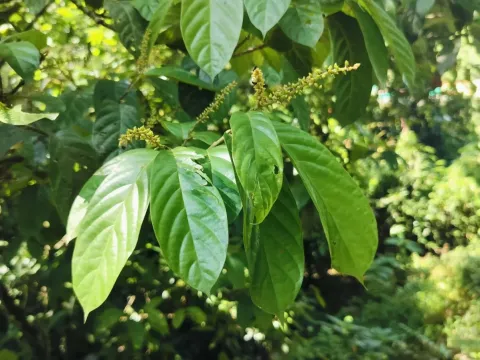
Antidesma montanum
Antidesma montanum
Antidesma montanum, a member of the Phyllanthaceae family, is a versatile evergreen tree or large shrub native to the tropical forests of Southeast Asia and Oceania. It thrives in high-humidity, warm climates typical of its natural range.
What the section contains
Antidesma montanum
The plant performs best in locations that offer full sun to partial shade. In agricultural practice, it is often found in mountain forests, which suggests a certain degree of adaptability to varied altitudes and slopes.
Well-draining, nutrient-rich soils are essential for the health of Antidesma montanum. The roots are sensitive to waterlogging, so soil aeration and proper drainage are critical for maintaining the plant's vigor.
The botanical structure of the plant features glossy, leathery leaves and small, fragrant flowers. It serves as an important ecological component in tropical environments, providing food for birds and wildlife.
Cultivation requires steady moisture, especially during the establishment phase. While it can handle some drought once mature, supplemental irrigation during the dry season significantly improves vegetative growth.
The fruit of Antidesma montanum is a small drupe, turning from red to black when ripe. Trees can be quite productive, yielding clusters of berries that are highly valued for their tart flavor.
Since the species is dioecious, agricultural planning must ensure the presence of both male and female trees in the orchard to guarantee fruit set through natural insect pollination.
Yield management involves selective pruning to maintain a manageable tree height and to increase sunlight penetration into the inner canopy, which significantly boosts fruit production.
Fertilization with balanced NPK formulas, specifically during the flowering period, helps in optimizing the nutrient uptake required for the development of quality fruit bunches.
In terms of economic potential, the fruit is widely used in traditional medicine and culinary applications, including the production of jellies, preserves, and traditional fermented beverages.
Common pests include scale insects and various leaf-eating caterpillars, which can stress young plants and impact overall yield. Frequent monitoring is necessary to keep infestations under control.
Fungal diseases are a major concern in high-humidity cultivation areas, particularly those causing leaf spot or fruit decay. These are often managed through cultural practices rather than chemicals.
Good orchard sanitation, such as removing fallen leaves and pruning dead wood, helps mitigate the risk of pathogen buildup in the soil and foliage.
Biological control agents, such as beneficial predatory insects, are often encouraged in orchards to manage pest populations naturally without harming the delicate ecosystem.
Environmental stress, such as extreme temperature fluctuations or improper drainage, can also make the plants more susceptible to secondary infections and opportunistic pests.
Harvesting Antidesma montanum is a labor-intensive process due to the uneven ripening of the fruits within the clusters. Selective hand-picking is required to ensure only ripe fruits are harvested.
The peak harvest season varies depending on local rainfall patterns, but typically occurs when the fruits turn deep red to black, indicating maximum sugar and juice content.
Post-harvest handling is critical because the fruits are thin-skinned and highly perishable. They should be transported in well-ventilated containers to prevent bruising and overheating.
For processing purposes, the fruit can be pulped or processed into juice immediately after picking to capture its fresh flavor and nutritional content before degradation starts.
Sun-drying is a traditional preservation method used in some regions. Dried berries can then be stored for months and used in various culinary preparations, providing value year-round.