
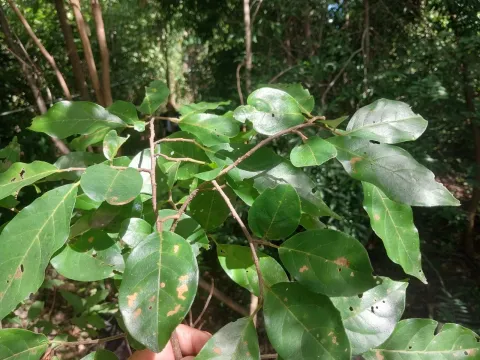
Antidesma madagascariense
Antidesma madagascariense
Antidesma madagascariense is a perennial plant belonging to the Phyllanthaceae family, native to the tropical regions of Madagascar and parts of East Africa. It is widely recognized for its adaptation to humid forest environments and thickets.
What the section contains
Antidesma madagascariense
The plant requires a strictly tropical climate with consistent temperatures and high humidity levels. It cannot tolerate frost or prolonged cold spells, which makes its cultivation limited to greenhouse environments in temperate regions.
Soil requirements involve well-draining, nutrient-rich substrates. It thrives in soils that are slightly acidic to neutral. Ensuring proper drainage is critical, as waterlogging often leads to root rot, which is a common issue for this species in heavy soil conditions.
Regarding light, Antidesma madagascariense performs best under partial shade to full sun exposure, depending on the intensity of the solar radiation. In very hot climates, it is advised to provide some shelter to prevent foliage desiccation.
Regular maintenance practices include pruning to maintain a manageable size, especially if the plant is grown as an ornamental. Consistent soil moisture management is necessary during the establishment phase of young plants.
The primary economic value lies in its edible fruits, which appear in hanging racemes. These berries change color as they ripen and are typically harvested by hand when they reach their full sweet-tart flavor profile.
Beyond food consumption, the species is appreciated in local reforestation efforts and landscaping. The wood is also harvested in some regions for small-scale carpentry and tool handles, showcasing the plant's multifaceted agricultural utility.