
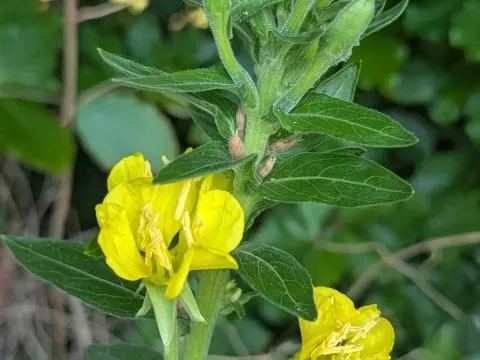
Evening primrose
Oenothera parviflora
Oenothera parviflora is a biennial plant belonging to the Onagraceae family, characterized by a rosette stage in its first year and a flowering stalk in its second.
What the section contains
Evening primrose
Sowing is best performed in late autumn or early spring when soil temperatures reach a stable minimum of 5 to 8 degrees Celsius.
Given the tiny size of the seeds, they should be sown on the surface with minimal soil cover, not exceeding 0.5 centimeters in depth.
Establishing row spacing between 45 and 60 centimeters is recommended to facilitate proper plant development and ease of mechanical weed control.
Rolling the soil after seeding is an effective technique to improve seed-to-soil contact, which is crucial for achieving uniform germination across the field.
This crop thrives in well-drained, sandy, or light loam soils, as it is highly sensitive to waterlogging which can rot the root system.
The plant requires full sun exposure throughout the growing season to ensure vigorous growth and maximum flower production for seed development.
It is known for its remarkable drought tolerance, making it an excellent candidate for regions where water resources for irrigation are limited.
A neutral to slightly acidic soil pH is ideal, as highly alkaline conditions can lead to nutrient deficiencies and reduced vigor in young plants.
Regular cultivation of the rows is necessary to prevent soil crusting and to improve aeration, which significantly promotes healthy root development.
The primary economic value of the evening primrose lies in its seeds, which are a major source of gamma-linolenic acid (GLA) for the pharmaceutical industry.
Under favorable conditions and proper management, the crop can yield approximately one metric ton of high-quality seeds per hectare of land.
The oil extracted from the seeds is highly sought after for its health-promoting properties and is extensively used in cosmetic and medical applications.
Beyond seed production, the plant serves as a beneficial melliferous species, attracting pollinators that support overall biodiversity within the farm environment.
The crop is relatively low-maintenance in terms of input costs, provided that the initial weed competition is managed effectively during the early stages.
Weed management is the most critical challenge during the first weeks of growth, as the seedlings are delicate and grow relatively slowly.
Fungal diseases, including powdery mildew and root rot, may occur in conditions of excessive humidity or poor ventilation within the crop canopy.
Insect pests, such as aphids, can target the flower buds, potentially reducing the seed set and lowering the total marketable yield for the season.
Cultural controls, such as crop rotation and spacing, are the primary methods for preventing the buildup of pathogens in the field soil.
Integrated pest management strategies should be applied to keep the fields healthy while maintaining the purity required for medicinal-grade products.
Harvesting should begin when the majority of the seed capsules turn brown and start to open, indicating that the seeds have reached physiological maturity.
A two-stage harvesting process is typically employed: windrowing to allow the material to dry, followed by combining at low drum speeds to avoid damage.
It is essential to monitor moisture levels closely, as seeds must be dried to below 12 percent moisture to ensure safe and stable storage conditions.
Post-harvest processing involves thorough cleaning to remove field debris, immature seeds, and other impurities to meet high commercial quality standards.
Storing the processed seed in cool, dry, and well-ventilated areas will prevent oil degradation and ensure a long shelf life before industrial extraction.