
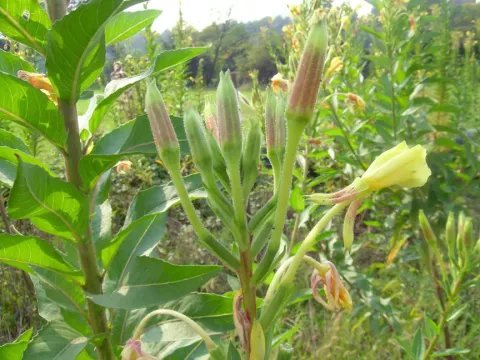
Evening primrose (Oenothera sesitensis)
Oenothera sesitensis
Evening primrose (Oenothera sesitensis) belongs to the Onagraceae family. It is a light-loving herbaceous plant that requires specific conditions for successful seed germination and strong root system establishment.
What the section contains
Evening primrose (Oenothera sesitensis)
In industrial agriculture, sowing is typically carried out in the spring when the soil temperature reaches 10–12 degrees Celsius. High-quality seedbed preparation is essential to ensure a fine-crumb structure for uniform emergence.
Sowing depth is a critical factor: due to the small size of the seeds, they should be planted no deeper than 1–2 centimeters. Maintaining proper plant density is crucial to ensure each plant has enough space to develop robust vegetative biomass.
In regions with mild climates, late autumn sowing is possible, allowing the plants to utilize spring meltwater for an early start. However, early spring remains the preferred window for most agricultural areas.
During the cultivation of Oenothera sesitensis, it is important to note that development is initially slow. Therefore, effective weed management in the early stages is essential to prevent suppression of the young seedlings.
This crop prefers light, well-drained sandy or loamy soils. It demonstrates significant drought resistance, making it suitable for regions with moderately limited moisture availability during the growing season.
The optimal pH range for this crop is slightly acidic to neutral. Stagnant water in the root zone is detrimental, so fields with high water tables or poor drainage should be avoided for commercial cultivation.
The plant adapts well to temperature fluctuations. Being highly light-demanding, it requires sunny locations free from shading by taller crops to achieve maximum productive potential and seed yield.
Nutrient requirements are moderate; however, applying phosphorus and potassium fertilizers during soil preparation significantly improves yield potential and the plant's resistance to environmental stress factors.
Oenothera sesitensis shows high survival rates in its designated cultivation zones, provided there is no prolonged waterlogging during the autumn, which could lead to crown rot or winter kill.
The yield of Oenothera sesitensis is determined by plant stand density and the overall level of agricultural management. The primary value of the crop lies in its seeds, which are rich in fatty acids, particularly gamma-linolenic acid.
Under optimal conditions, seed yields can range from 500 to 1200 kilograms per hectare. Uniformity in seed capsule ripening is a vital aspect, as it directly impacts total harvest efficiency and volume.
Economic utility involves the extraction of high-value oil, which is widely utilized in the cosmetics and pharmaceutical industries. High concentrations of bioactive compounds make the crop highly sought after in the nutraceutical sector.
In addition to seed harvest, the plant’s vegetative biomass can serve as raw material for various health-related products, expanding the crop's overall economic value for farmers.
Yield stability is largely dependent on timely crop protection measures that prevent premature seed shattering from capsules during the final stages of biological maturity.
The main threats to the crop include fungal diseases that flourish in high-humidity conditions. Various forms of powdery mildew are the most common, significantly reducing photosynthetic activity if left unchecked.
Pests such as aphids and certain lepidopteran larvae can damage buds and young leaves. Regular field monitoring is necessary to detect infestations early and allow for targeted biological or chemical control measures.
Root rot diseases may occur if the crop is planted in poorly drained soil. Prevention strategies include strict crop rotation and avoiding soil compaction within the rows during the season.
Weeds remain a major competitor during the early vegetative stage. The use of approved soil-applied herbicides helps reduce the cost of manual labor, which is critical for large-scale production efficiency.
Under adverse weather conditions, nematode infestations may occur. Pest control requires an integrated approach that combines precise agrotechnical practices with the appropriate use of plant protection products.
Harvesting is performed during the stage of full wax maturity of the seeds. Because capsules tend to shatter, it is vital to execute the harvest promptly once the target moisture content is reached.
Direct combining or a two-stage method can be employed. The two-stage method is often preferred for unevenly ripening fields to minimize losses due to shattering before the entire crop is ready.
After harvesting, seeds must be cleaned of plant debris and dried in ventilated facilities or on drying floors to safe moisture levels, typically between 8 and 10 percent.
Properly managed post-harvest logistics are essential to preserve the quality of the oil within the seeds and prevent oxidation processes that could degrade its nutritional or pharmaceutical value.
Seeds should be stored in dry, cool, and well-ventilated structures protected from rodents, ensuring the stability of essential fatty acids until the product is processed for industrial use.