
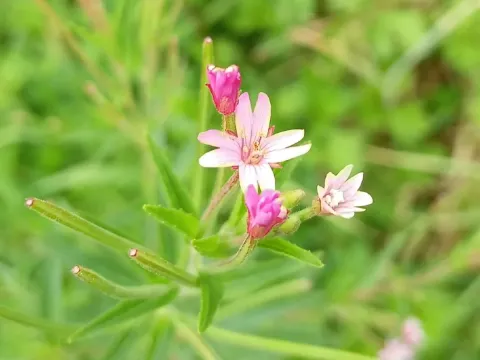
Fireweed
Chamerion
The sowing of Fireweed Chamerion angustifolium is best performed in late autumn to allow the seeds to undergo natural stratification. This exposure to cold temperatures during winter is essential to break seed dormancy and ensure uniform germination in the spring.
What the section contains
Fireweed
For spring sowing, seeds must be cold-stratified artificially for several weeks before planting. Due to their small size, the seeds should be sown on the surface of the soil and barely covered with a light layer of sand or fine compost to keep them in contact with moisture.
Vegetative propagation via root cuttings is the preferred method for establishing commercial plantations. Segments of rhizomes, approximately 10–15 cm long, should be planted in early spring or autumn. This method results in much faster establishment compared to seed cultivation.
Row spacing should be maintained at 60–70 cm to facilitate maintenance operations and prevent overcrowding. Proper spacing is critical to ensure adequate sunlight penetration and air circulation, which helps reduce the risk of common fungal diseases.
Clearance of perennial weeds is a mandatory step before planting. Fireweed seedlings grow slowly in their first year and can easily be outcompeted by more aggressive weeds, which may significantly reduce the success of the establishment phase.
Fireweed is a resilient plant that thrives in temperate climates, showing high environmental adaptability. It performs best in open, sunny locations where it can receive maximum daily sunlight, which is crucial for the development of its chemical profile.
The plant prefers well-drained, sandy-loam or loamy soils with a slightly acidic to neutral pH. It is highly sensitive to waterlogged conditions, which can lead to root rot; therefore, selecting a site with good natural drainage is essential.
This species is exceptionally cold-hardy, a trait characteristic of the Onagraceae family. It can withstand severe winter temperatures, and its deep-reaching rhizomes remain protected and dormant until spring, ready to sprout with the return of favorable conditions.
Consistent moisture is required during the active growing season, especially during the pre-flowering phase. While the plant can tolerate short periods of drought, supplemental irrigation during extreme heat ensures higher biomass yield and better foliage quality.
Soil fertility management should focus on organic amendments. While Fireweed is not a heavy feeder, incorporating compost or well-rotted manure before planting helps improve soil structure and water-holding capacity, supporting long-term productivity.
The biomass yield of Fireweed increases significantly as the plantation matures. Peak production is typically reached in the second or third year, after the rhizome network has fully established throughout the rows.
A well-managed plantation can produce between 5 and 8 metric tons of fresh biomass per hectare. The output of dried, high-quality leaf material is typically around 20–25 percent of the harvested fresh weight, depending on the moisture content at the time of processing.
Efficiency in harvesting is key to profitability. Since quality is defined by the leaf composition, harvest should be timed precisely with the onset of mass flowering to capture the highest concentrations of tannins, flavonoids, and vitamin C.
Sustainable exploitation allows for a productive lifespan of 5–7 years on the same plot. After this period, the plant density may become too high, leading to reduced vigor and requiring either thinning or the establishment of a new plantation site.
Data monitoring of the harvest allows for adjustment of inputs and pruning techniques. Regular care ensures that the plants are not over-harvested, maintaining the root health that supports the regrowth cycle for subsequent seasons.
The primary threats to Fireweed crops are fungal pathogens, particularly powdery mildew and various types of rust. These diseases flourish in humid, stagnant air, highlighting the importance of proper spacing and weed control for maintaining plantation health.
Pests such as the Elephant Hawk-moth larvae and various aphids can cause significant defoliation if left unchecked. Integrated Pest Management (IPM) strategies, including biological control and scouting, are the most effective ways to minimize damage.
Nematode infestations can be a concern in soils where the same crop is grown for too long. Signs of nematode damage include stunted growth and chlorotic leaves, which necessitate soil testing and crop rotation cycles.
Effective management includes the removal of diseased plant parts to prevent the spread of spores. Keeping the rows clean and ensuring proper airflow are simple yet powerful tools in preventing disease outbreaks within the plantation.
- Thinning of dense canopy to improve ventilation
- Prompt removal of diseased or infected biomass
- Use of biological insect control agents
- Monitoring for pest egg clusters on leaf undersides
- Maintenance of proper soil moisture to prevent root stress
The harvest season for Fireweed occurs during the full flowering period, typically between June and August. This window is when the secondary metabolites in the leaves are at their peak, ensuring a premium-grade final product.
Harvesting is usually done by hand-picking the upper portions of the stems, ensuring that the main stalks remain intact. This careful approach prevents excessive damage to the root system and promotes healthier growth for future harvests.
Once harvested, the plant material must be wilted in a shaded, well-ventilated area for approximately 12–24 hours. This step is crucial for reducing moisture content and preparing the leaves for the mechanical rolling process that initiates fermentation.
Transport of fresh biomass must be done in breathable containers to avoid internal heating, which leads to premature and uneven oxidation. Processing should ideally begin within a few hours of harvesting to maintain the desired flavor profile.
By the end of August, the harvest cycle concludes to give the plants sufficient time to store carbohydrates in their rhizomes. This dormancy preparation is vital for survival through the winter and ensures a vigorous start in the following spring season.