
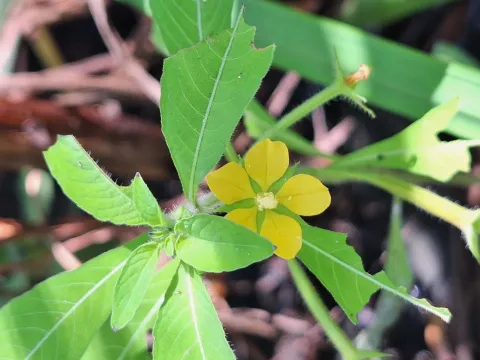
Ludwigia leptocarpa
Ludwigia leptocarpa
Ludwigia leptocarpa is an herbaceous perennial belonging to the Onagraceae family, primarily adapted to wetland ecosystems, riverbanks, and flooded agricultural areas.
What the section contains
Ludwigia leptocarpa
The plant originates from the tropical regions of the Americas and has naturalized in various warm climates worldwide due to its robust growth habits.
Botanically, it is recognized by its elongated, narrow fruit pods and yellow flowers, which are indicative of its taxonomic placement within the genus Ludwigia.
Optimal cultivation requires consistent moisture levels, as the species thrives in hydric soils and aquatic environments where regular water saturation is maintained.
High light intensity is critical for the plant, as it drives photosynthesis and supports the rapid development of its complex root system in muddy or silty substrates.
The primary threats to Ludwigia leptocarpa include fungal pathogens that exploit high humidity and stagnant water to infect stem tissues.
Pests such as aquatic insects and certain gastropods can cause significant foliage loss if populations are left unmanaged in cultivation sites.
Integrated pest management strategies are often necessary to prevent severe outbreaks, prioritizing environmental safety over aggressive chemical treatments.
Furthermore, in agricultural settings, competition from aggressive weed species can impede the establishment of the crop, necessitating periodic manual or mechanical intervention.
Effective management includes maintaining water quality and ensuring adequate space between plants to prevent the spread of diseases within the colony.