
Ludwigia grandiflora
Ludwigia grandiflora
Description
Growing requirements
Ludwigia grandiflora, commonly known as the water primrose, is a perennial aquatic herbaceous plant belonging to the Onagraceae family. It is recognized globally as an invasive species due to its aggressive growth patterns and ability to dominate aquatic habitats.
Originating from South America, the plant has successfully adapted to diverse environments across Europe and North America. Its agricultural significance lies in its role as a major weed that clogs irrigation channels, drainage systems, and water storage ponds.
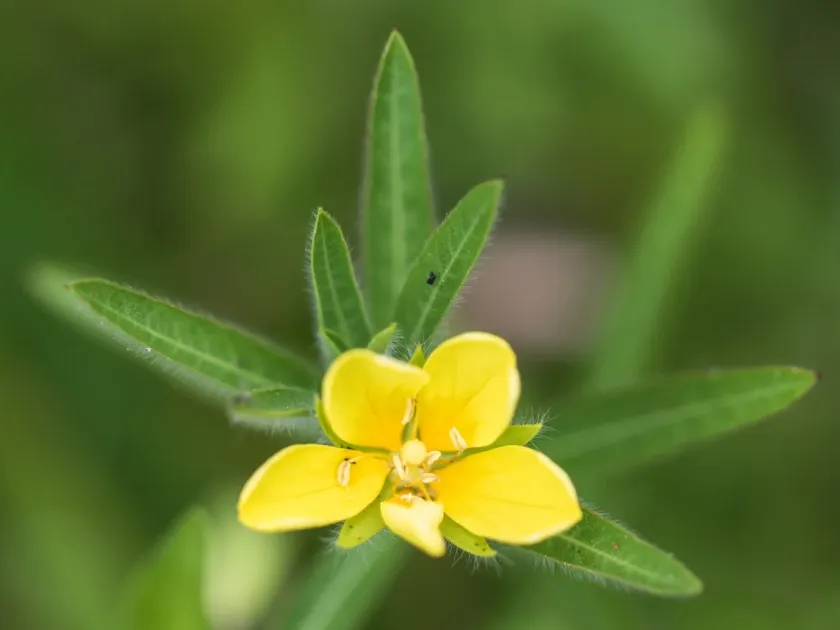
Botanically, the plant features succulent, creeping stems that can grow several meters long, with leaves ranging from lanceolate to ovate. It is most easily identified by its distinct, showy yellow flowers consisting of five petals that bloom above the water surface.
The species thrives in nutrient-rich, stagnant or slow-moving water bodies. It exhibits remarkable ecological flexibility, capable of rooting in saturated soil or floating freely as mats, which allows it to colonize both banks and open water areas effectively.
Management requires rigorous adherence to sanitation protocols. Because the plant propagates primarily through vegetative fragmentation, harvesting machinery must be thoroughly cleaned between sites to prevent the introduction of stem segments into new water systems.
Main diseases and pests
The primary threat posed by Ludwigia grandiflora is the disruption of agricultural hydraulics, which reduces the efficiency of water distribution systems and increases the risk of flooding in adjacent fields.
The plant demonstrates high resistance to common pathogens, and there are currently no significant diseases that naturally regulate its population size in the invasive range.
Regarding pests, the species lacks significant pressure from local insect populations, which is why biocontrol programs focus on introducing specialized natural enemies from its native range.
Integrated pest management strategies often combine physical removal with systemic herbicides, though the latter must be carefully selected to ensure safety for non-target aquatic organisms and water quality.
Sustainable control relies heavily on preventing the spread through early detection and rapid response protocols, targeting pioneer populations before they expand into extensive, unmanageable mats.