
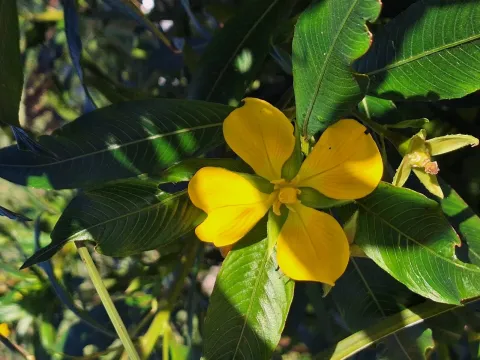
Ludwigia elegans
Ludwigia elegans
Ludwigia elegans is a perennial herbaceous plant belonging to the Onagraceae family. It is native to the tropical and subtropical zones of South America, where it thrives in marshy habitats, riverbanks, and shallow stagnant waters, demonstrating significant physiological adaptability to fluctuating water levels.
What the section contains
Ludwigia elegans
Botanically, the species is characterized by its elongated, lanceolate leaves arranged in opposite pairs along a succulent stem. The plant is prized for its aesthetic versatility, as it can transition between submerged and emersed forms depending on the specific hydrologic environment in which it is cultivated.
Agricultural success with Ludwigia elegans depends on high light intensity, which is essential to trigger the synthesis of anthocyanin pigments, resulting in its signature reddish hues. The optimal temperature range for robust growth is between +22 °C and +28 °C, ensuring metabolic processes remain active throughout the season.
The substrate requirements include a nutrient-rich, slightly acidic medium with high trace mineral availability. Specialized fertilizers, particularly iron-chelated compounds, are required in aquatic setups to prevent chlorosis, as the plant relies heavily on nutrient absorption through its leaf surfaces.
The primary economic use of this plant is in the ornamental horticulture and aquaculture trade, where it serves as a staple for foreground and mid-ground aquatic plant scaping. It is propagated primarily through stem cuttings, which root readily in nutrient-enriched substrate under favorable conditions.
The most common biological threats include infestation by epiphytic algae such as filamentous green algae, which compete for nutrients and light. Furthermore, poor water circulation can lead to oxygen depletion, causing the necrosis of basal tissues and promoting fungal infections in the stem nodes.