
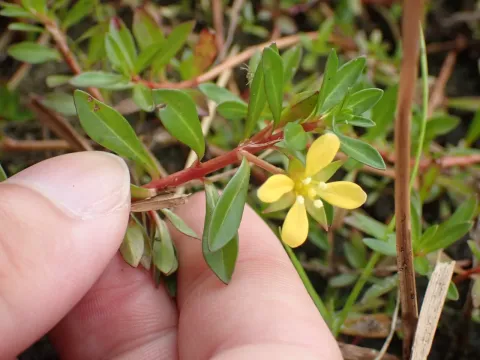
Ludwigia brevipes
Ludwigia brevipes
Ludwigia brevipes is a distinctive aquatic plant belonging to the Onagraceae family. Originating from the eastern United States, this species is typically found in wetlands and shallow water habitats, where it thrives in saturated soils and stable water environments.
What the section contains
Ludwigia brevipes
The plant features elongated stems adorned with narrow, lanceolate leaves that exhibit vibrant color variations, ranging from bright green to reddish-orange. Its botanical structure is characterized by its adaptability to various aquatic conditions, provided that the essential light and nutrient requirements are met consistently.
High-intensity lighting is crucial for the cultivation of Ludwigia brevipes. Sufficient light exposure is the primary driver for its rich coloration; without adequate spectrum and duration, the plant tends to lose its brilliance, resulting in sparse leaf development and elongated stems.
The plant performs best in slightly acidic to neutral water with moderate hardness. Providing a CO2-enriched environment and a nutrient-rich substrate allows it to flourish, enabling the plant to develop a lush, dense foliage that is highly desired in aquascaping designs.
Temperature management is another vital aspect, with an ideal range between 22 and 28 degrees Celsius. Consistent maintenance of water quality, including regular partial water changes, helps stabilize the nutrient levels and ensures that the plant remains healthy and vigorous.
Algae proliferation represents the most significant threat to the health of Ludwigia brevipes. Rapidly growing algae, such as hair or thread algae, can quickly cover the leaves, obstructing light and stifling the growth of the plant by competing for essential resources.
Iron deficiency is a common physiological issue that manifests as chlorosis, where the leaves turn pale or yellowish. Maintaining a strict schedule for dosing micro-fertilizers, particularly chelated iron, is essential to prevent this nutrient gap and ensure vivid colors.
Root system health can be compromised by poor substrate conditions, such as compaction or excessive organic buildup. A well-aerated, fine-grained substrate is recommended to support root development and prevent the onset of localized anaerobic decay.
Mechanical damage caused by certain herbivorous snails or overly active tank inhabitants can disrupt the growing tips, leading to stunted or irregular growth. Maintaining a balanced tank community is key to protecting the delicate structures of this stem plant.
Fungal or bacterial infections can occur if the water quality deteriorates due to excessive organic waste or inadequate circulation. Keeping the environment clean and ensuring moderate water movement are the best defensive measures against such pathological threats.