
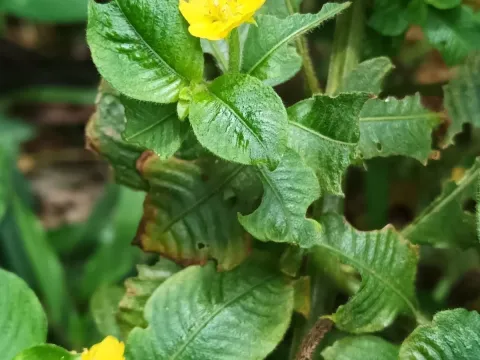
Ludwigia affinis
Ludwigia affinis
Ludwigia affinis is a perennial herbaceous plant belonging to the Onagraceae family. Originating from the tropical wetlands of South America, it is an amphibious species that thrives in areas with consistent moisture and high humidity.
What the section contains
Ludwigia affinis
Botanically, this species is defined by its slender, erect stems and lance-shaped leaves. Under high-intensity lighting conditions, the plant exhibits vibrant red or copper hues, which serve as a visual indicator of its metabolic health.
To cultivate Ludwigia affinis successfully, an aquarist must maintain precise water conditions. The pH level should be stable between 6.0 and 7.5, and the water temperature should be kept in the range of 22–28 degrees Celsius.
The plant requires significant light energy to maintain its aesthetic form. It is recommended to use specialized LED systems with a spectrum optimized for photosynthesis to ensure the plant does not become etiolated or stunted.
In terms of agricultural and horticultural use, this plant is strictly ornamental. It is highly valued in the aquarium hobby for creating lush backgrounds and adding contrast to green foreground layouts in aquascaping projects.
The primary threats to Ludwigia affinis in aquatic environments are nutrient deficiencies. A lack of iron or potassium often leads to the development of pinholes in leaves or total leaf chlorosis.
Improper substrate composition can also cause root decay. If the substrate is too compact or lacks essential nutrients, the plant will struggle to anchor itself and may eventually lose vigor and collapse.
Pests such as snails are known to consume the soft leaf tissue of young shoots, especially when the plant is already weakened by poor water quality. Constant surveillance is necessary to prevent significant damage.
Algal blooms pose a secondary threat to the plant. Because Ludwigia affinis grows relatively slowly compared to aggressive weeds, it can easily be smothered by filamentous algae if light levels are too high or nutrients are imbalanced.
Preventative care, including stable water chemistry and precise fertilization dosing, remains the most effective method for protecting the crop from pathogens and environmental stressors.