
Ludwigia brenanii
Ludwigia brenanii
Description
Growing requirements
Ludwigia brenanii is an exquisite aquatic plant belonging to the Onagraceae family. Known for its distinct appearance and vibrant coloration, it is highly sought after by enthusiasts of planted tanks. It originates from tropical regions where it thrives in moist, aquatic environments.
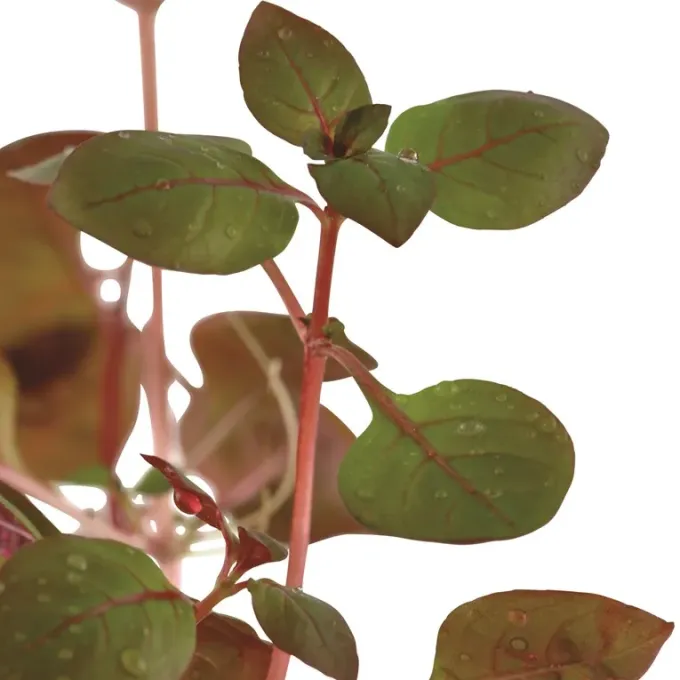
Botanically, this species is defined by its flexible stems and opposite leaves. The foliage can shift from a vibrant green to a stunning reddish-pink hue, provided the environmental conditions are met. These structural traits make it a visually striking addition to any professional aquascape.
Success with this species requires high-intensity lighting. Without sufficient light, the plant struggles to maintain its vivid pigmentation, often reverting to a dull green and experiencing stunted, elongated growth that lacks aesthetic appeal.
The substrate must be nutrient-rich. As the plant relies heavily on its root system for nutrient uptake, utilizing high-quality aquatic soils that provide essential minerals is critical for long-term health and vitality during the cultivation process.
Environmentally, the plant requires consistent CO2 injection and a stable water chemistry. A temperature range between 23–27 degrees Celsius is recommended. Furthermore, maintaining a slightly acidic pH ensures that the plant can efficiently assimilate the nutrients provided in the water column.
Main diseases and pests
Algal blooms pose the most significant threat to Ludwigia brenanii. Rapidly growing algae can smother the leaves, blocking necessary light and nutrients, which inhibits the plant's ability to thrive and may eventually lead to significant tissue decay.
Nutrient deficiencies, particularly iron, often manifest as chlorosis. When the leaves turn pale or yellow, it is a clear indicator that the micro-nutrient balance in the water column must be adjusted through targeted fertilization programs.
Mechanical damage during maintenance can weaken the stems, making them susceptible to rot. It is essential to use sharp trimming tools to ensure clean cuts, allowing the plant to heal rapidly and resume its active growth phase without infection.
Poor water circulation leads to the accumulation of organic waste around the roots, which can trigger fungal infections. Regular maintenance, such as gravel vacuuming and ensuring proper flow, is necessary to mitigate the risk of root-zone degradation.
While the species is generally resilient to pests in an aquarium environment, introducing infected plant material can pose a risk. Proper quarantine protocols should be followed before adding any new botanical elements to the primary growing environment.