
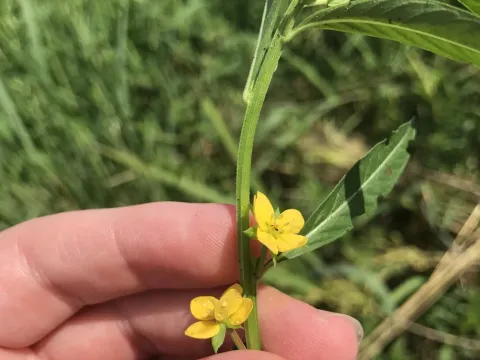
Ludwigia epilobioides
Ludwigia epilobioides
Ludwigia epilobioides is a perennial herbaceous plant belonging to the Onagraceae family. It is recognized for its adaptation to high-moisture environments, making it a specialized crop for wet landscapes.
What the section contains
Ludwigia epilobioides
The sowing process begins in late spring, once the danger of frost has passed and soil temperatures consistently exceed 18 degrees Celsius. Direct seeding is possible in warm climates, while cooler regions require greenhouse starts.
Seeds are extremely small and require light for germination; therefore, they should be sown on the surface of a fine, moist potting medium without covering them with soil.
Seedlings need to be transplanted with care to avoid root damage. A spacing of 30–40 cm between individual plants ensures sufficient airflow, which is critical for healthy development and disease prevention.
Initial establishment phase requires constant humidity. Using a fine mist system or covering the area with a thin layer of organic mulch helps maintain the necessary soil moisture levels for early growth.
This species thrives in nutrient-rich, moist to waterlogged soil conditions. It is frequently utilized in areas where conventional crops fail due to excessive water content in the substrate.
Soil composition should lean towards heavy loams or silts with high organic matter. A soil pH ranging between 6.0 and 7.2 is ideal for ensuring optimal nutrient uptake for the plant.
Full sun is essential for the plant to achieve its maximum biomass potential and display vibrant foliage. Shady conditions will lead to etiolated, weak stems that are prone to lodging.
Water availability is the most critical environmental requirement. While the plant can tolerate short periods of dry conditions, its agricultural performance is highest when its roots are consistently hydrated.
Regular fertilization with water-soluble fertilizers helps maintain vigorous growth. Nitrogen-rich formulas are preferred during the early vegetative phase, while potassium support is vital for overall health.
The yield of Ludwigia epilobioides is primarily evaluated in terms of biomass production for ornamental purposes or bioremediation projects. It acts as a natural water filter in various ecological settings.
Consistent growth rates can be achieved through regular pruning and nutrient management. Under optimal conditions, the plant can produce multiple harvests of stems per season.
Propagation is easily performed via stem cuttings. By planting cuttings directly into saturated soil, farmers can quickly expand the area covered by the culture without relying on seed stock.
Management of the crop is labor-intensive but rewarding, especially when integrating the plant into sustainable drainage or water purification systems on agricultural land.
Annual yields should be monitored to ensure the sustainability of the soil, as high biomass production can deplete soil nutrients over several consecutive growing seasons.
Common pests include aphids and spider mites, which tend to congregate on the tender leaves during hot, dry spells. Integrated pest management using biological controls is recommended.
Powdery mildew is a significant fungal threat, especially in humid and poorly ventilated conditions. Strategic spacing and pruning help mitigate the risk of fungal outbreaks.
Root rot occurs if the soil remains stagnant without sufficient oxygen exchange. Ensuring proper drainage, even in wet environments, is crucial for long-term survival.
Leaf-eating beetles can cause aesthetic and physiological damage. Regular field scouting is necessary to catch infestations early before they lead to severe plant stress.
Preventive measures include maintaining clean field boundaries and promptly removing any infected plant tissues to curb the spread of diseases within the plot.
Harvesting is typically conducted towards the end of the vegetative cycle, ensuring the plant has reached its peak structural maturity before the first frost appears.
Manual harvesting using disinfected shears is the standard procedure. Stems should be cut cleanly to minimize tissue injury and promote faster recovery of the root stock.
Collected biomass is ideal for composting or as organic mulch for other garden beds, provided the plant material was not exposed to chemical pesticides or harmful pathogens.
Preparation for the dormant season involves clearing away plant debris to remove overwintering sites for potential pests. This practice significantly reduces the disease pressure for the following year.
Effective post-harvest management ensures that the root system remains viable for the next growing season, allowing for perennial cultivation of the crop with minimal soil disturbance.