
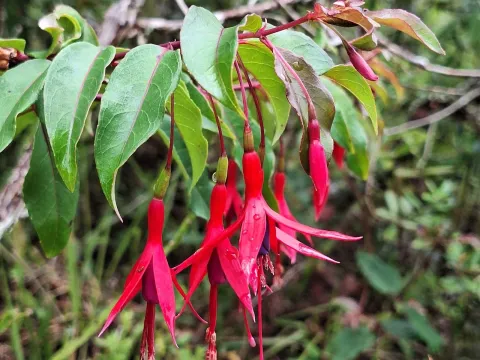
Royal fuchsia
Fuchsia regia
Royal fuchsia (Fuchsia regia) is a woody perennial belonging to the Onagraceae family. Originating from the mountainous regions of Brazil, this species is noted for its ability to climb or grow as an epiphyte in its natural habitat.
What the section contains
Royal fuchsia
The plant thrives in cool, humid environments with moderate light levels. It cannot tolerate harsh frost, making it suitable for temperate zone greenhouse cultivation or container gardening that requires winter protection.
For successful growth, Fuchsia regia requires well-draining, nutrient-rich soil that is kept consistently moist but never waterlogged. Incorporating organic matter into the growing medium helps maintain optimal nutrient levels.
Temperature management is critical: the plant prefers daytime temperatures around 18–22 °C and cooler nights. High heat combined with low humidity often leads to plant stress and premature flower drop.
Regular pruning is an essential part of the agricultural process for this crop, as it promotes denser branching and increases the total surface area for flowering stems, maximizing the plant's decorative potential.
The most common pests affecting Royal fuchsia are whiteflies and spider mites, both of which thrive in dry greenhouse conditions and can rapidly infest entire collections.
Fungal diseases, particularly grey mold (Botrytis cinerea), pose a significant threat during periods of high humidity and insufficient airflow within the plant canopy.
Root rot caused by Phytophthora species is a major risk factor if the drainage system is inadequate or if irrigation schedules are too aggressive during the dormant season.
Integrated pest management, including the use of sticky traps and biological control agents, is recommended to minimize reliance on synthetic chemical applications.
Routine inspections of the underside of leaves are necessary to detect early stages of pest infestations, allowing for immediate corrective measures before the population reaches an uncontrollable level.