
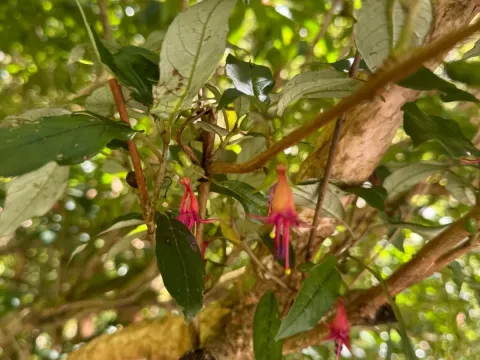
Tree fuchsia
Fuchsia excorticata
Fuchsia excorticata, commonly known as the tree fuchsia or kotukutuku, is a unique plant species in the Onagraceae family that grows as a tree rather than a small shrub.
What the section contains
Tree fuchsia
Native to New Zealand, it requires a mild, temperate climate with high humidity levels and consistent soil moisture throughout the year to thrive properly.
The plant grows best in rich, fertile, and well-drained soils, avoiding areas prone to waterlogging which can quickly lead to root rot and other fungal diseases.
It prefers shaded or semi-shaded environments, as direct sunlight can cause leaf burn, especially in regions with high solar radiation and low atmospheric humidity.
Botanically, it is recognized by its papery, exfoliating bark that peels off in thin strips and its distinct bicolored leaves, which feature a dark green top and a silvery underside.
Agricultural use of F. excorticata is primarily focused on environmental restoration and reforestation projects in New Zealand rather than commercial crop production.
The fruit, a dark-colored berry, is edible and sweet, although it has no significant market presence due to its delicate nature and short shelf life post-harvest.
The plant is highly valued for its nectar-rich flowers, which serve as a critical food source for endemic bird species like the tui and bellbird in its native habitat.
While the wood of the tree fuchsia is exceptionally dense and durable, it is not harvested on an industrial scale due to the tree's slow growth and protected status.
Genetic potential exists for breeding programs to cross this species with ornamental varieties to improve hardiness and flower size, though this remains a niche area of interest.
Common pests affecting this crop in cultivation include aphids, whiteflies, and spider mites, which can proliferate rapidly in greenhouse settings with poor ventilation.
Fungal issues, particularly powdery mildew and gray mold (Botrytis), are significant risks during periods of high humidity and cool, stagnant air temperatures.
Young specimens are highly susceptible to damage from gastropods like snails and slugs, which can consume significant portions of foliage during the establishment phase.
Root system health is paramount, as waterlogged soil encourages Pythium and Phytophthora infections that can cause rapid decline and eventual tree mortality.
Management requires an integrated pest control approach, focusing on maintaining optimal airflow and proper sanitation to prevent the spread of soil-borne pathogens.
Harvesting the berries is done by hand-picking individual fruits once they reach their full dark purple or black coloration, indicating peak sweetness and ripeness.
Because the ripening process is staggered over a long period, multiple harvest passes are necessary to gather the entire crop effectively throughout the season.
The berries are extremely fragile, necessitating the use of shallow containers to prevent bruising and crushing during transport from the field to the point of consumption.
Given the perishable nature of the fruit, it is recommended to consume or process the yield within a day to prevent fermentation or bacterial spoilage.
There is currently no standardized commercial post-harvest technology for this crop, as its utilization remains restricted to local consumption and wild harvesting.