
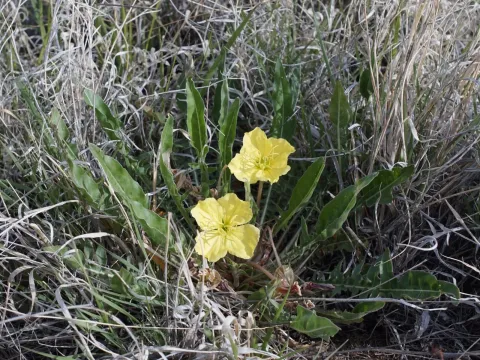
Yellow evening primrose
Oenothera flava
Yellow evening primrose (Oenothera flava) belongs to the Onagraceae family. It is a perennial herbaceous plant often grown in agricultural settings as a biennial crop for its valuable seeds.
What the section contains
Yellow evening primrose
The sowing season typically starts in early spring when soil temperatures reach 10-12 degrees Celsius. Alternatively, late autumn sowing can be practiced in temperate zones, allowing for natural stratification of the seeds.
Sowing is conducted in rows with spacing of 45-60 centimeters. This arrangement ensures optimal conditions for mechanical weeding and proper nutrient distribution for each plant.
Since the seeds are very small, they should be sown at a depth of 1-2 centimeters. Proper soil contact through rolling after seeding significantly improves germination rates.
Initial plant growth is relatively slow, making effective weed control during the early stages of vegetation critical for successful crop establishment.
This crop thrives in sunny, open areas, demonstrating high adaptability and drought resistance once established due to its deep taproot system.
The best soils for cultivation are well-drained sandy or light loamy soils. Excessive moisture must be avoided, as stagnant water can lead to root rot and poor development.
Fertilization should prioritize phosphorus and potassium to enhance fruit set and oil accumulation in the seeds. Nitrogen should be applied moderately to prevent excessive vegetative growth.
Agrotechnics include regular inter-row cultivation to aerate the soil and control invasive weeds that compete for moisture and sunlight.
Supplementary irrigation is recommended during dry spells, especially during the flowering and seed-filling stages, to maximize production efficiency.
The main commercial value of this crop lies in its seeds, which are rich in gamma-linolenic acid, highly sought after by the pharmaceutical and cosmetic industries for oil extraction.
Yields typically range from 5 to 10 centners per hectare, depending on cultivation intensity, soil fertility, and favorable weather conditions during pollination.
Beyond seed production, Oenothera flava serves as an excellent honey plant, blooming in the evening and attracting pollinators, which can provide an additional source of income.
The crop offers stable returns over several years when managed as a perennial, making it a reliable choice for diversified farming systems.
High oil quality is dependent on correct harvesting timing and proper post-harvest drying, ensuring the stability of the active components within the oil.
Common diseases include powdery mildew and various leaf spots, which proliferate under conditions of high humidity and poor air circulation.
Pests such as aphids and leaf-eating insects pose significant risks, potentially damaging the foliage and reducing the plant's overall photosynthetic capacity.
Prevention relies on strict crop rotation, the use of certified seed material, and the removal of weeds that can serve as hosts for pathogens.
In cases of severe infestation, systemic insecticides may be used, provided that application follows standard safety regulations for agricultural crops.
Maintaining soil health and avoiding over-fertilization are key strategies to enhance the plant's natural resistance to diseases and environmental stress.
Harvesting should occur when the seed pods turn brown and start to mature. Precise timing is essential to prevent seed shattering and maximize total yields.
A two-phase harvest method is recommended: mowing the plants into windrows to dry, followed by threshing once the moisture content drops sufficiently.
Post-harvest cleaning is necessary to remove impurities, followed by drying the seeds to a moisture level of 8-10% to ensure long-term stability.
Stored seeds must be kept in cool, dry, and well-ventilated conditions to prevent oil oxidation and maintain the chemical integrity of the product.
Following strict protocols during the threshing and cleaning phases ensures a high-quality product that meets the stringent requirements of the pharmaceutical industry.