
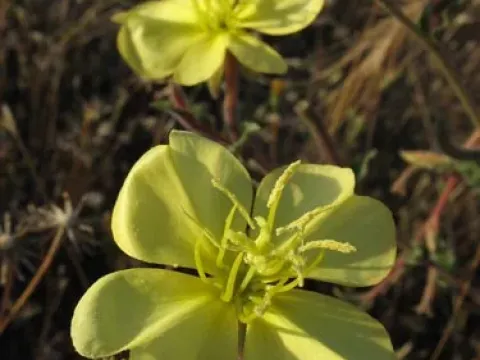
Striated evening primrose
Oenothera striata
The striated evening primrose (Oenothera striata) belongs to the Onagraceae family. Sowing is typically performed in spring once soil temperatures reach 10-12 degrees Celsius to ensure rapid and uniform emergence.
What the section contains
Striated evening primrose
Late autumn sowing is also a viable option, allowing seeds to undergo natural stratification, which often results in more vigorous early spring growth.
Seeds should be planted at a shallow depth of 0.5–1 cm because they are small and sensitive to soil compaction. Row spacing of 45-60 cm is recommended to facilitate effective weed management.
For commercial production, a seeding rate of 2–3 kg per hectare is standard. Ensuring good seed-to-soil contact is essential for maximizing germination rates across the field.
Early-stage weed control is critical during the first few weeks of development, as the plant initially grows slowly while establishing its rosette.
The striated evening primrose thrives in sunny, open locations as shading can significantly hinder growth and floral production. It is a drought-tolerant crop, although supplemental watering during dry periods enhances yield.
Well-drained, sandy loam or loamy soils are ideal for this plant. Proper aeration is crucial, as waterlogged conditions can lead to root diseases and plant death.
The optimal pH range for this crop is between 6.0 and 7.5. On highly acidic soils, liming is recommended to optimize nutrient availability for the plant.
The plant responds well to balanced fertilization, particularly with phosphorus and potassium, which strengthen root development and improve overall resilience against environmental stress.
While native to South America, it has adapted well to various temperate climates, proving to be a versatile species for agricultural exploitation in many regions.
The primary agricultural value of this species lies in its seeds, which are rich in gamma-linolenic acid. Seed yield is highly dependent on planting density and crop management intensity.
In optimal conditions, farmers can expect a yield of 0.5–0.8 tonnes of seeds per hectare. Consistent yields are achieved through strict weed control and adequate moisture management.
The plant typically produces seeds in its first growing season, making it a viable and profitable short-term crop for commercial farmers.
Harvesting requires careful timing because seed pods do not mature simultaneously. Pre-harvest desiccation is often used to ensure all pods are ready for harvesting at once.
The extracted oil is in high demand in the pharmaceutical and cosmetic industries due to its potent anti-inflammatory and regenerative properties.
Powdery mildew is the most common disease encountered, particularly in humid conditions with poor air circulation. Proper spacing and ventilation are key preventative measures.
Pests like aphids and spider mites can attack young shoots during dry spells. Regular scouting and the use of targeted insecticides help keep pest populations below economic thresholds.
Root rot occurs primarily in heavy, waterlogged soils. Maintaining good drainage and avoiding over-irrigation are the best strategies to prevent fungal root infections.
Rust fungi may occasionally affect the foliage during prolonged wet periods, necessitating the application of approved fungicides for oilseed crops.
Crop rotation is essential to prevent the buildup of soil-borne pathogens and pests, ensuring long-term health for subsequent plantings.
Harvesting is usually carried out via combine harvester once the pods are fully mature. Quick action is needed to prevent seed loss from natural shattering once pods dry out.
Once harvested, the seed material must be dried immediately at temperatures not exceeding 40 degrees Celsius to preserve the quality and chemical profile of the oil.
Cleaning and mechanical sorting are necessary to remove debris. High-purity seed lots are essential for industrial oil extraction processes to function efficiently.
Seeds should be stored in a cool, dry, and dark environment to maintain their viability and oil quality for as long as possible before processing.
Post-harvest residues can be incorporated into the soil as organic matter or used for composting, contributing to soil fertility management on the farm.