
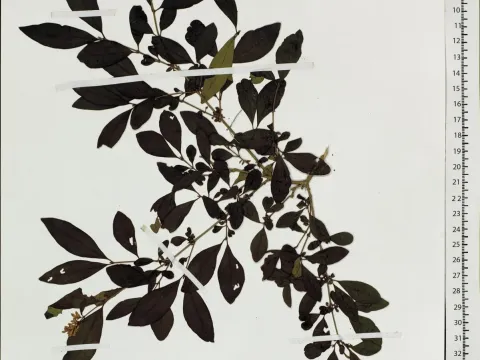
Tschonoski privet
Ligustrum tschonoskii
Tschonoski privet (Ligustrum tschonoskii) is a member of the Oleaceae family. Originating from the regions of East Asia, primarily Japan, this deciduous shrub is highly regarded in horticulture for its dense growth pattern and compact form, making it an excellent choice for smaller garden areas.
What the section contains
Tschonoski privet
Botanically, this species is defined by its opposite, lanceolate leaves and slow growth habit. During the summer, it produces small, fragrant white flowers arranged in terminal panicles. Following the flowering phase, the shrub develops small, dark-colored berries that often persist into the late autumn months.
The cultural requirements for this plant focus on well-drained, fertile soil. It thrives in positions that offer full sun or partial shade. While the species is relatively adaptable, it is essential to ensure that the site is protected from harsh, drying winds, especially during the colder winter seasons.
Agronomic management involves periodic pruning to maintain the desired shape and density of the shrub. Because the plant responds very well to shearing, it is frequently utilized by landscape professionals for formal hedges, low dividers, and intricate topiary designs that require high levels of precision.
Soil moisture should be maintained at a moderate level, as the plant does not tolerate waterlogging. Implementing an organic mulch around the base of the shrub helps to regulate soil temperature and moisture levels, which is particularly beneficial for younger specimens during their establishment phase.
Common pests associated with this species include aphids and scale insects, which can cause significant damage if left untreated. Regular monitoring of the foliage and stems during the growing season allows for early intervention using appropriate horticultural oils or systemic insecticides.
Fungal diseases, specifically powdery mildew, may occur in areas with poor airflow and high humidity. To minimize the risk of infection, it is crucial to space the plants correctly at the time of installation and to prune out any dead or damaged wood to improve canopy ventilation.