
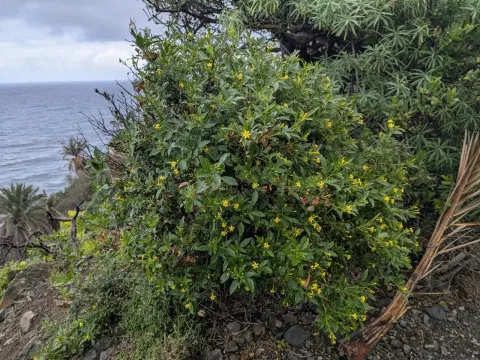
Wild jasmine
Chrysojasminum
Wild jasmine (Chrysojasminum fruticans) is a deciduous or semi-evergreen shrub within the Oleaceae family. It is recognized by its slender, angular green stems and striking yellow tubular flowers that appear from late spring through the summer months, adding aesthetic value to the landscape.
What the section contains


Wild jasmine
The plant originates from the Mediterranean region, extending into Western Asia and the Caucasus. It is naturally adapted to rugged, rocky terrain, which dictates its preference for sites that provide excellent drainage and full sun exposure to thrive throughout the growing season.
Regarding soil requirements, wild jasmine prefers well-draining, slightly alkaline to neutral soil types. It is highly intolerant of waterlogged conditions, which can lead to root rot; therefore, planting on slopes or elevated beds is highly recommended for optimal plant health.
Climate tolerance is a key aspect of its management. While it is quite hardy and resistant to periods of drought, it is not fully frost-tolerant in harsh, continental climates. In colder regions, providing mulch at the base and wind protection is essential for ensuring winter survival.
Maintenance of this crop involves regular pruning to keep the shrub compact and encourage flowering. By removing dead or crossing branches immediately after the blooming period, gardeners ensure that the shrub remains vigorous and produces a dense cover of healthy foliage.
Common pests that affect Chrysojasminum fruticans include aphids and spider mites. These pests typically cluster on the tender new growth, causing curling and chlorosis of the leaves. Regular inspection and, if necessary, the application of horticultural oils or insecticidal soaps are standard management practices.
Fungal diseases, specifically powdery mildew, are the primary pathogens affecting this species, particularly when planted in areas with poor air circulation. To manage disease pressure, it is important to maintain spacing between plants and avoid overhead irrigation that keeps the foliage wet for extended periods.