
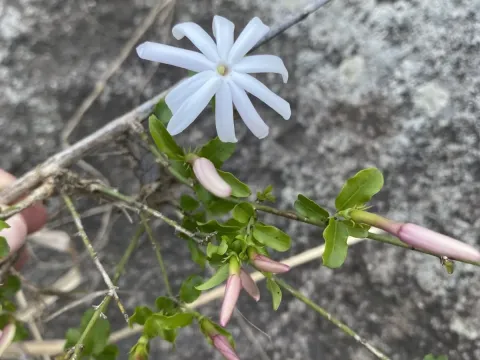
Starry wild jasmine
Jasminum multipartitum
Propagation of Jasminum multipartitum is typically achieved through vegetative methods, specifically using semi-hardwood cuttings taken during the late spring or early summer months.
What the section contains
Starry wild jasmine
The cuttings should be placed in a well-draining medium consisting of peat, perlite, and sand to ensure adequate moisture retention without waterlogging.
Application of rooting hormones is recommended to increase the success rate of propagation, as the woody stems require specific conditions to develop roots effectively.
Once established in nursery containers, the seedlings are transplanted to their permanent locations once the soil temperature is consistently warm.
Proper spacing is essential to ensure that individual plants receive sufficient airflow, reducing the risk of fungal infections during the early stages of growth.
Belonging to the Oleaceae family, this plant is native to Southern Africa and is characterized by its star-shaped, fragrant white flowers that often feature a reddish exterior.
The species thrives in full sun to partial shade. In its natural range, it adapts to various soil types, provided they are rich in organic matter and possess excellent drainage properties.
Climate adaptability is limited; while it tolerates mild frosts, sustained cold temperatures will cause damage, necessitating protection or indoor cultivation in cooler zones.
Irrigation should be consistent during the active growing season, but the plant displays moderate drought tolerance once fully established in the landscape.
Fertilization with a balanced, slow-release fertilizer during the onset of spring promotes vigorous vegetative growth and enhances the density of the floral display.
The most common pests affecting Jasminum multipartitum are spider mites, especially in dry, warm environments where they can cause leaf drop.
Scale insects and aphids are also frequent threats that target the stems and undersides of leaves, weakening the overall vigor of the shrub.
Fungal issues such as powdery mildew may occur if the plants are situated in areas with poor ventilation and high humidity, manifesting as a white powder on foliage.
Integrated pest management, including regular inspection and targeted application of horticultural oils or pesticides, is required to maintain plant health.
- Regular monitoring for signs of infestation.
- Pruning to remove dead or diseased stems.
- Maintaining proper spacing to ensure ventilation.