
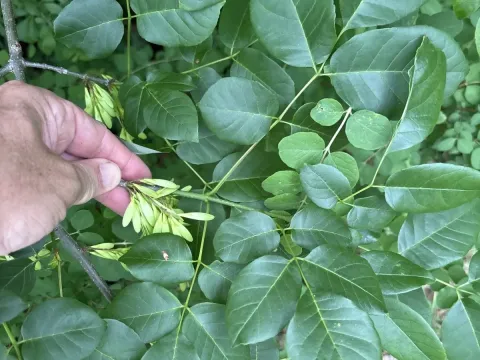
White ash
Fraxinus albicans
White ash (Fraxinus albicans) is a robust deciduous tree belonging to the Olive family (Oleaceae). It is primarily known for its valuable timber and its significant role in reforestation projects within its natural habitat ranges.
What the section contains
White ash
The culture thrives in deep, moist, and well-drained soils that are rich in organic nutrients. It exhibits a high sensitivity to extremely heavy clays, where root respiration is restricted, necessitating proper soil site selection before planting.
Regarding light requirements, this species is classified as light-demanding. Optimal growth rates are observed in full sun conditions, which stimulate branch development and promote the formation of a strong central leader, crucial for wood quality.
White ash is well-adapted to temperate climate zones with sufficient precipitation levels during the growing season. It requires a distinct dormancy period and is generally resistant to moderate winter cold once the trees are established.
Effective management includes regular monitoring of soil nutrient levels and the application of balanced NPK fertilizers. Maintaining appropriate spacing is also vital to reduce competition for light and nutrients among individual trees.
The most devastating threat to white ash is the emerald ash borer, an invasive beetle that causes systemic damage to the vascular tissue. Infested trees often succumb to the beetle's burrowing activities within a few years if not treated.
Fungal diseases, including ash yellows and various leaf spot pathogens, pose significant risks to tree vitality. These pathogens are particularly prevalent in regions with dense canopy cover and high relative humidity.
Root rot caused by Phytophthora species represents a major concern in nurseries and young plantations. Implementing strict biosecurity protocols and ensuring high-quality planting stock are essential preventive measures.
Insect pests such as leaf miners and scale insects can cause significant cosmetic and physiological damage. Monitoring and targeted insecticide applications are recommended when population density exceeds established economic thresholds.
Silvicultural practices, such as removing infected specimens early, are critical to limiting the spread of disease within a plantation. Healthy, vigorous trees are naturally more resistant to minor pest pressures.