
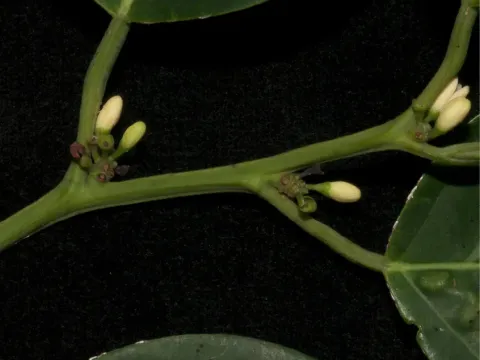
Strombosiopsis
Strombosiopsis
Strombosiopsis is a genus of tropical trees belonging to the Olacaceae family. Native to the humid rainforests of Africa, these trees are recognized for their role in the complex structure of tropical ecosystems and their ecological significance.
What the section contains

Strombosiopsis
The cultivation or natural growth of Strombosiopsis requires a tropical climate characterized by consistently high temperatures throughout the year. It thrives in regions with significant annual rainfall and high humidity levels, which are essential for its biological metabolism.
Regarding soil requirements, Strombosiopsis prefers deep, well-drained, and nutrient-rich tropical soils. It is highly sensitive to waterlogged conditions, which can lead to root system decay and hinder the overall growth and development of the tree.
The species displays remarkable adaptation to low-light conditions during its sapling stage, allowing it to compete within the dense canopy. However, mature trees require sufficient overhead light to maintain optimal growth rates and wood density.
Management of these trees requires careful attention to the forest environment. Maintaining soil integrity and preventing environmental disturbances are crucial for the long-term viability of Strombosiopsis populations in their natural or semi-managed habitat.
The primary economic utility of Strombosiopsis is the production of timber. The wood is highly regarded for its physical robustness, density, and durability, making it suitable for high-end construction and specialized furniture manufacturing.
Timber harvesting operations must adhere to sustainable forestry practices. Given the relatively slow growth rate of Strombosiopsis, managed harvest cycles are necessary to prevent resource depletion and allow for natural regeneration.
Technical processing of the harvested wood is essential to ensure quality. It requires proper drying and seasoning techniques to minimize the risk of warping or cracking, ensuring the final material meets industrial and consumer standards.
Local communities often rely on various aspects of the tree for traditional uses, which necessitates a balanced approach to forestry management. Ensuring that harvesting does not negatively impact local livelihoods is a core aspect of modern forest policy.
Effective resource management involves periodic assessment of stand health and regeneration rates. By monitoring the density and age structure of the stands, stakeholders can ensure a continuous and responsible supply of high-quality wood.