
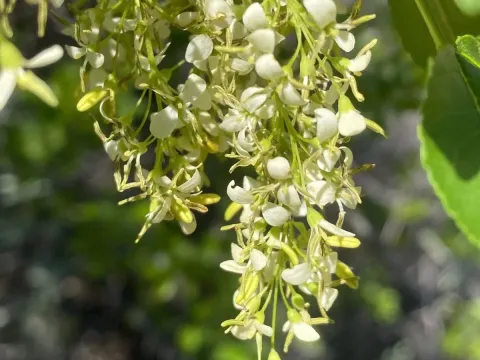
Two-petal ash
Fraxinus dipetala
The two-petal ash (Fraxinus dipetala) is a deciduous shrub or small tree belonging to the Olive family (Oleaceae). It is a species native to the chaparral and woodland regions of California, perfectly adapted to Mediterranean climates.
What the section contains
Two-petal ash
Botanically, it differs from many other ash species by its distinct two-petaled flowers, which create a showy display in spring. The plant typically reaches heights between 3 and 6 meters, depending on local soil conditions and moisture availability.
Cultivation requirements focus on providing excellent soil drainage and full sun exposure. The plant is highly drought-tolerant once established, making it an excellent choice for low-water landscaping projects in arid or semi-arid environments.
Soil quality should ideally mimic natural rocky slopes with a slightly alkaline or neutral pH level. It does not tolerate heavy, waterlogged clay soils, which can lead to physiological stress and root rot.
In terms of usage, the two-petal ash is valued in erosion control and as a nectar source for pollinators. Its ability to survive with minimal maintenance makes it highly desirable for sustainable urban forestry and native habitat restoration.
The primary threats to this species include fungal root diseases, which are triggered by improper irrigation management. Avoiding overwatering during the summer dormancy period is crucial for tree longevity.
Pests such as aphids and leaf-rolling caterpillars may infest the foliage during the spring growth flush. Integrated pest management strategies are recommended to keep damage levels below the threshold of economic impact.
Increased wildfire risk in its native range poses a significant threat to young stands. Maintaining a clean area around the base of the tree is a standard agricultural practice to mitigate potential fire damage.
Specific wood-boring beetles can pose a risk to the structural integrity of older trunks. Regular inspections for exit holes or frass are necessary to monitor the health of the specimens within a cultivation area.
Environmental stress, such as extreme heat waves combined with lack of ventilation, can predispose the plant to various opportunistic pathogens. Proper spacing during planting is essential for air circulation.