
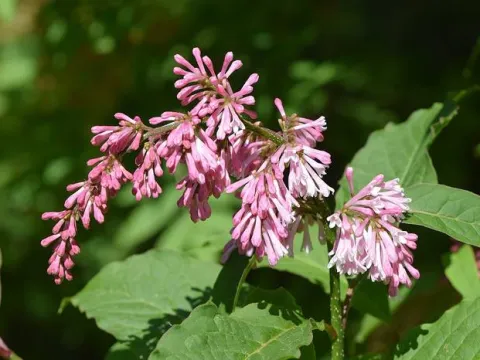
Tomentose lilac
Syringa tomentella
The tomentose lilac (Syringa tomentella) is a deciduous shrub belonging to the Oleaceae family. Originating from the mountainous regions of Western China, it is highly regarded in horticulture for its distinct, softly hairy leaves and delicate pale pink blossoms.
What the section contains
Tomentose lilac
This species thrives best in locations with full sun exposure, although it displays a notable tolerance for partial shade. When selecting a planting site, it is crucial to ensure it is sheltered from strong, drying winds that can strip the blossoms prematurely.
Soil requirements focus on well-draining, fertile substrates with a neutral to slightly alkaline pH. The plant performs poorly in compacted or waterlogged soils, making the addition of organic matter and proper drainage essential for long-term health.
Climate adaptability is a hallmark of this species, as it is native to high-altitude areas. It handles moderate winters well, although young specimens benefit from protective mulching during their first few years to prevent soil freezing and root damage.
Cultural maintenance involves periodic pruning, which is best performed immediately after the flowering period concludes. This encourages dense branching and improves airflow through the center of the shrub, which is vital for preventing moisture-related issues.
Powdery mildew is the most common fungal threat, typically appearing during humid, stagnant weather. Maintaining adequate spacing between individual plants and avoiding overhead irrigation can significantly reduce the risk of infection.
Insect pests, such as lilac leaf miners and scale insects, may occasionally infest the foliage. Regular monitoring and the application of appropriate horticultural oils or systemic insecticides are effective measures to control these pest populations.
Bacterial blight can affect twigs and branches, appearing as dark, shriveled sections. Pruning out infected wood and disinfecting tools between cuts are necessary practices to prevent the further spread of the bacteria throughout the shrub.
Mites can also pose a risk during exceptionally dry summers, leading to leaf stippling and yellowing. Maintaining consistent moisture levels in the soil helps the plant sustain its natural resistance against such opportunistic pests.
Proper hygiene, such as clearing fallen leaves and debris from the base of the shrub in autumn, is highly recommended to eliminate overwintering sites for various fungal spores and dormant insect stages.