
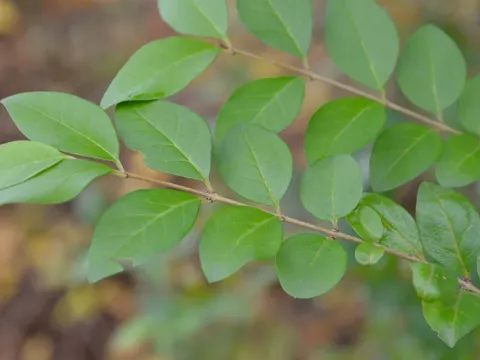
Amur privet
Ligustrum amurense
Amur privet (Ligustrum amurense) is a deciduous shrub belonging to the Oleaceae family. Native to Northeast Asia, including the Amur River region of Russia, China, and Korea, it is highly valued for its resilience.
What the section contains
Amur privet
This species is widely recognized for its extreme cold hardiness. It thrives in diverse climates, making it a reliable choice for cold-winter regions where less robust ornamental plants might fail to survive.
The plant is highly adaptable to various soil types, provided they are well-drained. It grows effectively in soils ranging from sandy loams to heavier clays, though it performs best in rich, moist, and well-aerated soil.
Regarding light, it flourishes in full sun or partial shade. Its ability to tolerate urban pollution and atmospheric contaminants makes it a standard selection for city landscaping, roadside planting, and noise reduction buffers.
Its primary agricultural and horticultural value lies in its exceptional response to pruning. This capacity makes it a premier candidate for formal hedges, topiary art, and structured landscape boundaries in garden design.
While generally robust, Amur privet can be susceptible to powdery mildew under conditions of high humidity and poor air circulation. Proper spacing during planting is essential to mitigate this risk.
Several insect pests can affect the foliage, including leaf rollers and various aphid species. Aphids, in particular, gather on tender new shoots and can lead to weakened growth if left untreated.
Scale insects can occasionally appear, causing damage to the stems and leaves. If infestations become severe, chemical control using systemic or contact insecticides is recommended to preserve the shrub's health.
Standard cultural practices for disease management include removing dead or diseased wood during pruning. Ensuring that the plant receives adequate nutrients and water helps maintain its natural resistance against pests.
Early identification of pest activity is critical for effective management. Integrated pest management (IPM) strategies, which prioritize regular monitoring, are most effective for long-term health and maintenance of hedges.