
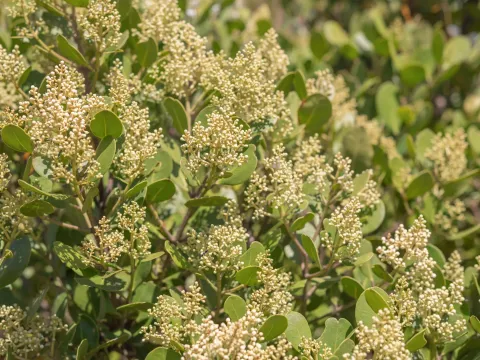
Cape olive
Olea capensis
The Cape olive (Olea capensis) is a hardy evergreen tree belonging to the Oleaceae family. It is widely recognized for its robust nature and its ability to thrive in various subtropical habitats, making it a significant species in regional arboriculture and forestry.
What the section contains
Cape olive
The climate requirements for Olea capensis focus on consistent temperatures. While it is quite adaptable, the tree prefers regions with mild winters and sunny summers. It can withstand moderate exposure to wind, which contributes to the development of its dense and characteristic growth pattern.
Soil requirements involve a preference for well-drained loams. The species does not tolerate waterlogging; therefore, ensuring proper soil structure is essential for preventing root-related disorders. It can adapt to a range of soil pH levels, provided the nutrient profile is sufficient for sustainable growth.
Water management is crucial during the early stages of establishment. Although mature trees exhibit significant drought tolerance due to their deep root systems, younger specimens require a structured irrigation schedule to ensure survival and consistent annual vertical growth.
Regarding agricultural techniques, light exposure is the most important factor. The tree requires full sun for optimal photosynthesis and the development of high-quality wood density. Proper spacing between trees is necessary to avoid competition and ensure that each specimen receives adequate light and air circulation.
The primary yield of Olea capensis is its exceptionally hard wood, often referred to as ironwood. Because the tree grows quite slowly, the economic yield is measured over decades rather than seasons. The wood is highly sought after for its durability, fine grain, and resistance to wear.
Harvesting is typically managed through selective logging techniques. This approach ensures the sustainability of the woodland and allows for the long-term production of timber without depleting the forest resource base, which is vital for environmental stewardship.
While the fruit is not a major commodity in global food markets, it supports local ecosystems by providing a food source for wildlife. This integration into the landscape contributes to biodiversity, which is an important aspect of modern agroforestry models.
Economic returns are optimized by managing trees for specific timber grades. By controlling growth and canopy development through regular pruning, foresters can maximize the length and quality of the clear trunk, which increases the value of the harvested wood.
Yield management also includes the long-term sequestration of carbon. Cape olive plantations are effective at capturing atmospheric carbon over their long lifespans, providing environmental services that are increasingly valued in international agricultural standards.
Fungal pathogens represent the most significant threat to Olea capensis, particularly those that thrive in humid environments. Diseases such as leaf spots can lead to defoliation, which reduces the tree's vigor and its ability to produce high-quality wood.
Insect pests, such as scale insects, can infest the foliage and succulent stems. These pests can cause chlorosis and stunted growth. Integrated pest management strategies, involving natural predators and targeted treatment, are usually employed to keep populations below economic damage thresholds.
Wood-boring beetles can cause severe damage to the trunks of older trees, compromising the integrity of the timber. Regular monitoring for signs of these pests, such as sawdust or exit holes, is a standard practice for maintaining the commercial value of the wood.
Environmental stress, such as unseasonal frost or extreme drought, can weaken the tree's defense mechanisms, making it more susceptible to opportunistic pathogens. Proper cultural care, including adequate nutrition and moisture, is the best defense against these external stressors.
To mitigate these risks, professional foresters emphasize the importance of crown hygiene. Removing dead or diseased branches allows for better airflow, which reduces the humidity around the leaves and significantly lowers the likelihood of successful fungal infection.