
Blue ash
Fraxinus quadrangulata
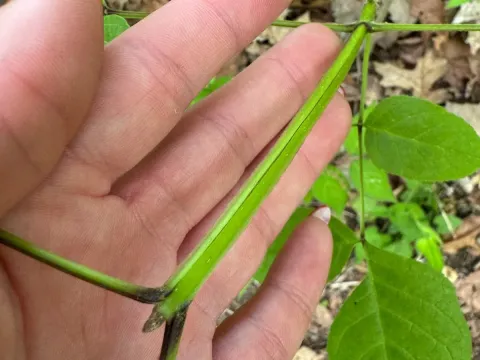
Blue ash (Fraxinus quadrangulata) is a deciduous tree belonging to the Oleaceae family, native to the central United States. It is easily identified by its unique four-sided twigs with corky ridges, which serve as its primary botanical characteristic and distinguish it from other members of the Fraxinus genus.
What the section contains
Blue ash
The species is remarkably adaptable to limestone-rich, rocky soils where other tree species struggle to thrive. It possesses a high tolerance for alkaline soil conditions, making it a valuable candidate for reforestation projects in areas with challenging soil chemistry and moderate moisture levels.
As a light-demanding species, Blue ash requires open growing spaces to achieve its full potential. It exhibits excellent drought resistance once established, provided the root system can access well-drained substrates. Its growth rate is generally slow, emphasizing the need for long-term management strategies.
Economically, Blue ash is prized for its high-quality, dense wood. Historically used for tool handles, flooring, and furniture, the timber provides excellent durability and structural integrity. Sustainable forestry practices are essential to ensure the longevity of these stands for future timber production.
Effective plantation management involves proper site selection and monitoring of soil pH. Ensuring adequate spacing between individuals reduces competition for light and nutrients, thereby promoting healthy crown development and reducing the susceptibility of young trees to physiological stress.
The most significant threat to Fraxinus quadrangulata is the Emerald Ash Borer (Agrilus planipennis), an invasive insect that has caused widespread mortality in ash populations. Intensive management, including systematic surveying and the application of systemic insecticides, is necessary to protect vulnerable stands.
Ash dieback caused by the fungus Hymenoscyphus fraxineus is another major concern. This disease impacts foliage and twigs, often leading to canopy thinning. Effective control measures focus on maintaining plantation hygiene, removing infected plant debris, and promoting biodiversity within the forest ecosystem.