
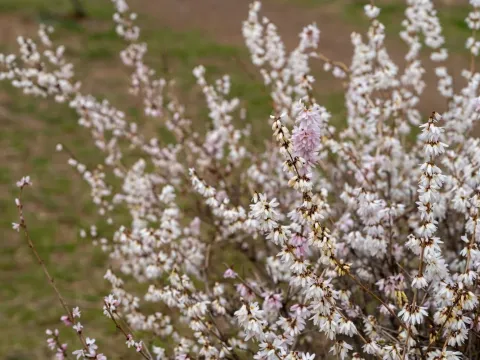
Abeliophyllum
Abeliophyllum Nakai
Abeliophyllum, commonly known as the White Forsythia, is a monotypic genus in the family Oleaceae native to the Korean Peninsula. It is a deciduous shrub highly prized for its fragrant white flowers that bloom in late winter or early spring.
What the section contains

Abeliophyllum
The cultivation of this shrub requires a site with full sun to partial shade, sheltered from cold winds. The soil should be fertile, moist, and well-drained, with a slightly acidic to neutral pH level to ensure optimal nutrient uptake.
Botanically, the plant is characterized by a slow growth habit, making it an excellent choice for ornamental landscaping. The flowers emerge on previous year's growth, which dictates specific timing for pruning operations.
Agricultural practices for this plant include regular irrigation during the initial establishment period and periodic fertilization in early spring. Minimal soil cultivation around the root zone is recommended to avoid damaging the fine feeder roots.
The primary use of Abeliophyllum is decorative, often planted as a focal point or in mixed shrub borders. It is particularly valued in cold-climate gardening for its ability to provide early seasonal interest before most other plants bloom.
While relatively robust, Abeliophyllum can be susceptible to soil-borne pathogens if planted in waterlogged conditions. Ensuring proper soil structure and drainage is the primary defense against root-related complications.
Insect pests, such as aphids, may occasionally attack the soft tissues of new foliage. Management strategies should include regular monitoring and the use of insecticidal soaps if an infestation occurs.
Winter hardiness is a major consideration in regions with harsh freezes. Protective mulching around the base is essential to prevent frost-heaving of the soil and potential damage to the crown of the plant.
Fungal leaf spot diseases can develop if the planting density is too high or if air circulation is insufficient. Thinning the canopy through selective pruning promotes healthy airflow and reduces the probability of infection.
Integrated pest management, focusing on sanitation and maintaining healthy soil nutrition, is the most effective approach for preserving the long-term vigor of the shrub in a garden environment.