
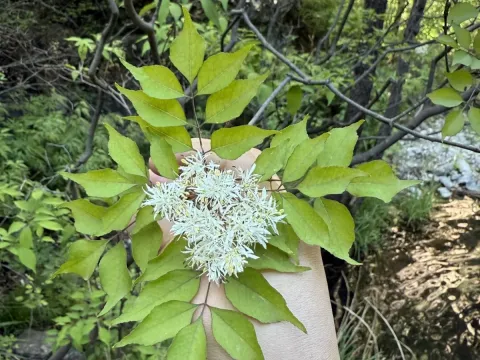
Bunge's ash
Fraxinus bungeana
Bunge's ash (Fraxinus bungeana) is a deciduous tree species belonging to the Oleaceae family. Originally native to Northern China, this tree is well-regarded for its compact growth habit and aesthetic appeal in landscape design.
What the section contains
Bunge's ash
The plant thrives in temperate climates, showing significant tolerance to cold temperatures once established. It requires a sunny location to maintain its shape and prefers well-drained, fertile soil, ideally with a neutral to slightly alkaline pH.
In terms of agricultural management, regular watering is essential during the establishment phase. Once the root system is fully developed, the tree becomes moderately drought-tolerant, although sustained summer heat may require irrigation to ensure vigorous growth.
Soil structure should be monitored for compaction, as this species performs best in aerated conditions. Adding organic matter to the soil during the planting process significantly improves the survival rate and annual growth rate of saplings.
Economically, Bunge's ash is utilized for ornamental purposes in urban planning, park landscaping, and as a component of shelterbelts. Its relatively slow growth makes it a manageable choice for smaller garden spaces.
Like many species in the Fraxinus genus, Bunge's ash can be susceptible to fungal pathogens such as leaf spot and anthracnose. Maintaining proper spacing between trees is crucial to ensure adequate air circulation and reduce humidity around the leaves.
Pest threats include various aphids and defoliating caterpillars. If left unchecked, these insects can cause significant foliage loss, which may weaken the tree and make it susceptible to opportunistic diseases.
Stem-boring insects are a major concern for weakened or stressed trees. Maintaining general tree health through proper fertilization and watering is the best defense against invasive wood-boring pests.
Sanitation practices, including the removal of deadwood and infected leaves during the dormant season, are vital to preventing the recurrence of common fungal issues in the following spring.
Chemical control should be considered only when infestation levels exceed economic thresholds, prioritizing environmentally friendly systemic treatments whenever possible.