
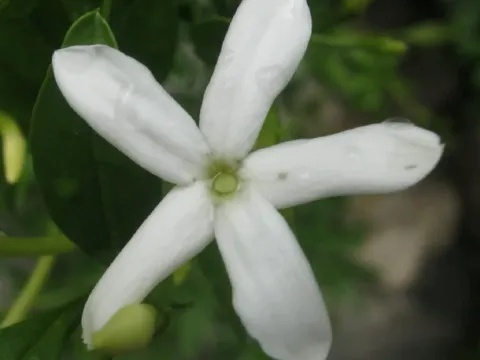
Angular jasmine
Jasminum angulare
Angular jasmine (Jasminum angulare) is a vigorous evergreen vine belonging to the Oleaceae family. Native to South Africa, it is widely recognized for its fragrant white flowers and rapid growth in subtropical climates.
What the section contains
Angular jasmine
The plant thrives in locations with bright, filtered sunlight. While it can tolerate full sun in mild regions, it performs best in positions where it is protected from intense afternoon heat.
Cultivation requires well-draining, nutrient-rich soil. The plant does not tolerate waterlogged conditions, which can lead to root rot; therefore, the substrate must be porous and high in organic matter.
Botanically, it is distinguished by trifoliate leaves and clusters of small, star-shaped, sweetly scented blooms. As a climbing plant, it requires a sturdy trellis or support structure to reach its full potential.
Maintenance involves routine pruning to control its vigorous growth and promote denser flowering. During the growing season, moderate fertilization with a balanced liquid fertilizer is recommended to support continuous blooming.
Spider mites are common pests that thrive in the dry conditions often found in indoor environments. They cause yellowing of the foliage and can lead to severe leaf drop if not managed properly.
Mealybugs can also infest the stems and leaf axils. Physical removal or the application of insecticidal soaps is typically effective for controlling minor infestations before they spread.
Root rot is a major physiological threat caused by poor soil drainage. Ensuring that the pot has adequate drainage holes and avoiding deep, frequent watering in winter is essential for plant longevity.
Fungal leaf spot diseases can occur if there is insufficient air circulation. Proper spacing and avoiding overhead watering can significantly reduce the risk of such infections.
Early diagnosis is the key to maintaining a healthy jasmine vine. Regular monitoring of both the upper and lower leaf surfaces allows for the prompt application of control measures.