
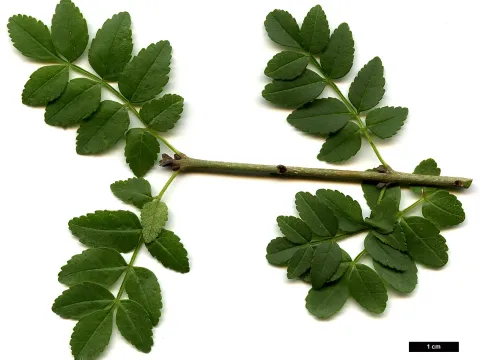
Afghan ash
Fraxinus xanthoxyloides
The Afghan ash (Fraxinus xanthoxyloides) is a deciduous tree belonging to the Oleaceae family. It is native to the rugged terrains of Afghanistan, Pakistan, and the Himalayas, where it has evolved to thrive in harsh, semi-arid environments.
What the section contains
Afghan ash
This species is highly valued in horticulture for its exceptional drought tolerance. It is a slow-growing tree that exhibits a compact habit, making it an excellent candidate for urban landscape designs, xeriscaping, and areas where water conservation is a priority.
Regarding soil requirements, the tree demands excellent drainage. It performs best in rocky, stony, or sandy substrates. Heavy, water-logged soils are detrimental to the root system and should be avoided or heavily amended before planting.
Botanically, it is distinguished by its pinnate leaves with small leaflets, providing an elegant, fern-like canopy. The tree can reach moderate heights, and its ability to withstand significant temperature fluctuations is a key feature of its biology.
In terms of practical utility, Afghan ash is frequently utilized for soil stabilization and slope protection. Its robust root network is capable of anchoring itself into stony substrates, effectively preventing erosion in mountainous or hilly agricultural regions.
One of the primary threats to Fraxinus xanthoxyloides is the Emerald Ash Borer (EAB), which poses a severe risk to many ash species globally. Infestation typically leads to the decline and eventual death of the tree if left untreated.
Fungal pathogens, particularly Hymenoscyphus fraxineus, cause shoot dieback and systemic damage. This fungus spreads easily in humid climates, often resulting in significant canopy loss and weakening the tree's overall structural integrity.
Scale insects and aphids are common pests that feed on sap. While usually not fatal to established trees, heavy infestations can cause leaf yellowing and reduced vigor, potentially making the plant more susceptible to secondary infections.
To maintain tree health, horticulturalists emphasize the importance of monitoring for signs of stress, such as crown thinning or bark splitting. Early detection of pests allows for localized treatments that can save the specimen from severe damage.
Sanitation is crucial in managing tree health. Removing fallen leaves and infected twigs helps reduce the inoculum levels of fungal spores in the environment. Pruning should always be performed using sterilized equipment to prevent the spread of pathogens between plants.