
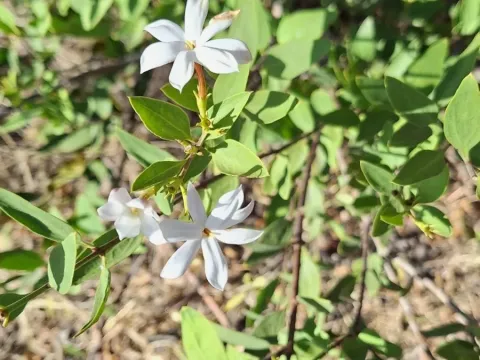
Jasminum glaucum
Jasminum glaucum
Jasminum glaucum is a woody shrub or climber belonging to the Oleaceae family. It is recognized for its glossy, glaucous leaves and fragrant, star-shaped white flowers that appear in clusters.
What the section contains
Jasminum glaucum
Native to South Africa, this species thrives in warm, temperate climates. It has adapted to various habitats but generally prefers regions that do not experience severe frost or freezing temperatures.
The plant requires plenty of bright, indirect sunlight to flourish. When grown in containers, it should be placed in well-lit areas, ensuring protection from the intense heat of the midday sun.
A well-draining, nutrient-rich soil mix is essential for the healthy development of its root system. It prefers a slightly acidic to neutral pH balance, which supports optimal nutrient absorption.
Watering must be consistent during the active growing season. The plant requires moderate moisture, yet it is crucial to allow the soil to dry out slightly between waterings to prevent root rot.
The plant is primarily utilized in ornamental horticulture for landscaping and architectural garden features. Its ability to climb makes it ideal for trellises, fences, and walls.
In the fragrance industry, the aromatic flowers are harvested to extract essential oils. This process requires precise timing, typically at dawn, to ensure the volatile compounds are at their peak.
Pruning is a fundamental horticultural practice for this crop. Regular trimming not only maintains the desired shape but also encourages a denser growth habit and more frequent flowering.
Propagation is typically achieved through semi-hardwood cuttings taken during the growing season. Using rooting hormones can significantly enhance the success rate of propagation.
Fertilization with a balanced, slow-release fertilizer during the spring and summer months provides the necessary nutrients for sustained vegetative growth and prolific flower production.
The primary threats to Jasminum glaucum include fungal diseases, which often manifest in environments with poor air circulation or excessive leaf wetness.
Common pests such as aphids, spider mites, and scale insects frequently attack the foliage, especially in greenhouse or indoor environments where natural predators are absent.
Integrated Pest Management (IPM) strategies, including the use of neem oil or insecticidal soaps, are recommended to control infestations without damaging the plant's delicate tissues.
Sanitation practices, such as removing fallen leaves and debris, play a vital role in preventing the spread of pathogens throughout the cultivation area.
Maintaining proper spacing between plants ensures adequate airflow, which acts as a natural preventative measure against the development of powdery mildew and other blights.