
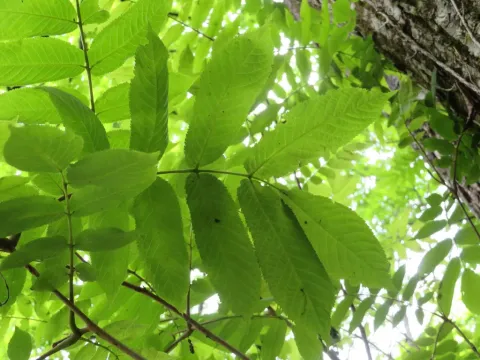
Korean ash
Fraxinus platypoda
The Korean ash (Fraxinus platypoda) is a deciduous hardwood tree belonging to the Oleaceae family. It is distinguished by its robust growth habit and is a prominent member of the temperate forest ecosystems of East Asia.
What the section contains
Korean ash
Native to regions including China, Japan, and the Russian Far East, this species is well-adapted to varied terrain. It primarily thrives in valley forests, where the soil moisture is consistent and the drainage is sufficient to support root health.
Climate requirements for this species are centered on moderate temperature regimes. The tree exhibits significant cold tolerance, making it an excellent candidate for reforestation projects in northern latitudes where growing seasons are relatively short.
Regarding soil, Fraxinus platypoda performs best in deep, well-drained, and nutrient-rich soils. It does not tolerate waterlogged conditions or extreme alkalinity, preferring neutral to slightly acidic pH levels to optimize nutrient uptake.
Economically, the species is valued for its high-quality timber, which is robust and aesthetically pleasing, widely used in premium furniture production. Beyond its timber value, it serves as a critical component in environmental conservation, acting as a windbreak and a source of shade in urban planning.
The primary threats to Fraxinus platypoda include various pathogens that affect the genus, particularly fungal blights that cause stem lesions and premature leaf fall.
Insect pests, most notably the emerald ash borer, pose a catastrophic risk to this species, as larval feeding can effectively girdle the tree and disrupt nutrient transport within the phloem.
Environmental stress, such as prolonged drought periods or, conversely, severe flooding, can weaken the trees and increase their susceptibility to opportunistic pathogens and pest infestations.
Maintaining biological diversity within stands is a key strategy to mitigate threats, as monocultures are significantly more vulnerable to rapid disease spread and pest outbreaks.
Effective management requires rigorous monitoring of health status, prompt removal of infected timber, and adherence to quarantine protocols to prevent the accidental introduction of invasive pests into healthy stands.