
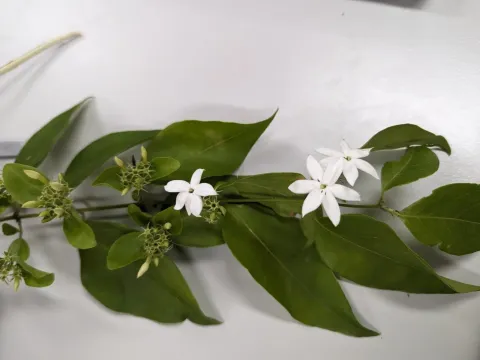
Jasminum elongatum
Jasminum elongatum
Jasminum elongatum is a woody climbing plant belonging to the Oleaceae family, naturally distributed across the tropical regions of Southeast Asia. It thrives in dense forests and mountainous areas, where it utilizes its long, flexible stems to climb toward the sunlight in the canopy.
What the section contains
Jasminum elongatum
The botanical structure of this species includes dark green, oblong-lanceolate leaves that are arranged oppositely along the stems. Its flowers are typically clustered in terminal cymes, providing a delicate and fragrant display that is highly valued in ornamental horticulture.
To cultivate this species successfully, growers must provide well-draining, nutrient-rich soil with a slightly acidic to neutral pH. Proper soil aeration is essential, as the roots are sensitive to waterlogging, which can quickly lead to physiological stress and root rot pathogens.
Climate requirements include a warm, humid environment with protection from frost, as the plant is not winter-hardy. In temperate climates, Jasminum elongatum must be maintained in greenhouses or as a conservatory plant, where temperatures remain consistently above 15 degrees Celsius.
Agrotechnical practices involve regular pruning to manage the vigorous growth of the vines and to encourage branching. Adequate support systems such as trellises or wires are necessary to maintain the vertical habit of the plant and to ensure proper sunlight exposure for foliage.
The primary utility of Jasminum elongatum lies in its ornamental value for vertical landscaping and garden structures. Additionally, its aromatic blossoms are harvested in some regions to extract essential oils, which are utilized in high-end perfume production and traditional aromatherapy.
The plant is susceptible to common pests such as spider mites, mealybugs, and aphids, particularly in indoor or greenhouse settings with poor ventilation. Integrated pest management strategies, including regular inspections and the application of biological controls, are recommended for maintaining plant health.