
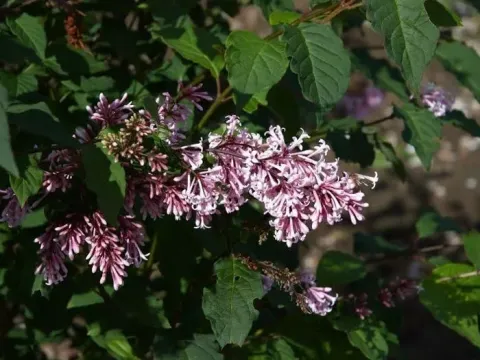
Josiflexa lilac
Syringa josiflexa
Josiflexa lilac (Syringa josiflexa) is a hybrid ornamental shrub belonging to the Oleaceae family. It is a highly valued plant in professional landscaping due to its unique growth habit and profuse, fragrant inflorescences that appear in late spring.
What the section contains
Josiflexa lilac
Regarding climatic adaptability, this species is noted for its exceptional winter hardiness. It thrives best in temperate regions with full sun exposure, although it maintains its health in light partial shade during the hottest part of the day.
The soil requirements for Syringa josiflexa are focused on drainage and fertility. It prefers deep, loamy soils with a near-neutral pH level. Heavy clay soils that retain excessive water should be amended with organic matter to improve permeability.
Routine maintenance includes systematic pruning to maintain the desired shape and size of the shrub. Removing spent flowers prevents the plant from spending energy on seed production, thereby enhancing future blooming capacity.
Watering management is essential, especially during the first years of establishment. Mulching around the base helps regulate soil temperature and minimizes moisture evaporation, ensuring stable growth conditions throughout the vegetative season.
The primary fungal threat to Josiflexa lilac is powdery mildew, which typically appears as a white coating on the leaves. This condition is often encouraged by poor air circulation and high humidity levels around the foliage.
Bacterial blight can also affect the stems and leaves, leading to blackened tissue and necrosis. Immediate pruning of affected branches is necessary to prevent the systemic spread of the bacteria within the shrub.
Pest management focuses on controlling aphids and scale insects. These sap-sucking pests can weaken the plant, making it more susceptible to opportunistic secondary infections. Scouting should begin early in the spring.
Lilac leafminers are another frequent issue, causing discoloration and curling of the leaves. Manual removal of damaged foliage is often sufficient for minor infestations, whereas systemic treatments are required for severe outbreaks.
Overall plant health is the best defense against pests and diseases. Maintaining a balanced nutritional program and practicing strict sanitation, including the removal of leaf debris in autumn, minimizes the overwintering of pathogens.