
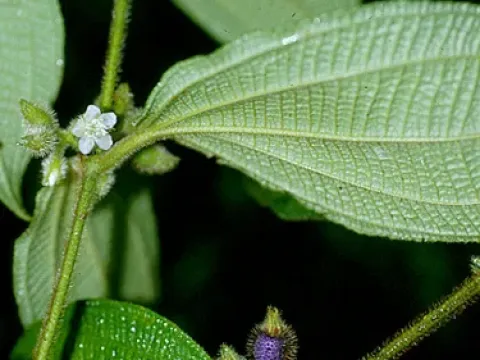
Clidemia dentata
Clidemia dentata
Clidemia dentata is a notable species within the Melastomataceae family, recognized for its distinctively veined, serrated leaves and characteristic tropical growth habit. It functions as a perennial shrub that thrives in warm, humid environments.
What the section contains
Clidemia dentata
Originating from the tropical landscapes of Central and South America, the species has evolved to prefer environments with partial shade. This adaptation makes it a sensitive but rewarding crop when managed under controlled conditions.
Soil requirements for this plant are centered on fertility and drainage. An ideal medium consists of a peat-based or organic-rich substrate that holds moisture without becoming waterlogged, ensuring healthy root development.
Climate conditions are critical for the successful cultivation of Clidemia dentata. It requires stable temperatures, ideally between 20 and 28 degrees Celsius, and cannot survive exposure to frost or prolonged cold drafts.
Agricultural management involves routine watering schedules and consistent humidity levels. Providing a balanced fertilizer during the active growing season helps maintain the vigor of the plant and supports its dense foliage development.
Pathogen risks are primarily associated with high moisture environments and poor air circulation. Root rot is a significant threat, often triggered by overwatering or soil that lacks adequate aeration.
Common pests include spider mites and mealybugs, which tend to infest plants in stagnant or dry air. These pests can rapidly compromise the health of the leaves if not addressed through early detection.
Integrated pest management strategies should focus on maintaining clean cultivation areas and monitoring the underside of leaves for early signs of insect activity.
Chemical treatments, when necessary, should be applied with caution, favoring systemic insecticides that effectively control pests while minimizing toxicity to the plant's delicate tissues.
Maintaining proper spacing between individual plants is essential for reducing the risk of disease transmission and ensuring that all parts of the canopy receive sufficient airflow.