
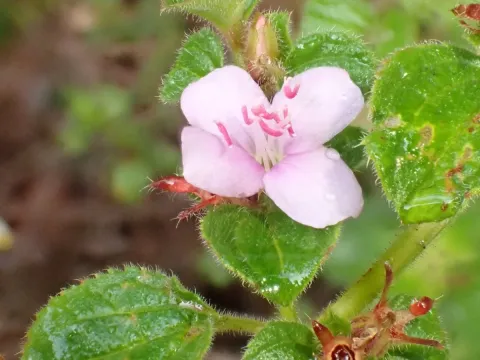
Comolia
Comolia
The genus Comolia belongs to the Melastomataceae family. This is a diverse group of predominantly tropical plants, naturally distributed across various regions in South and Central America, thriving in specific ecological niches.
What the section contains

Comolia
These plants typically inhabit humid tropical and subtropical climate zones. They are frequently found in savannas, along forest edges, and near water bodies, where atmospheric humidity remains consistently high throughout the year.
For optimal growth, Comolia species require light, well-drained soils rich in organic matter. These plants are highly sensitive to waterlogged conditions at the root zone, which is why they naturally select areas with excellent natural drainage.
A stable temperature regime is a critical requirement for development. As a thermophilic plant, Comolia cannot tolerate even brief frosts, which effectively restricts its cultivation to tropical regions or controlled greenhouse environments in temperate areas.
Botanically, most species within the genus are categorized as small shrubs or subshrubs featuring opposite leaf arrangements. A defining characteristic of the Melastomataceae family is their unique leaf venation pattern, defined by prominent longitudinal veins converging at the base and apex of the leaf blade.