
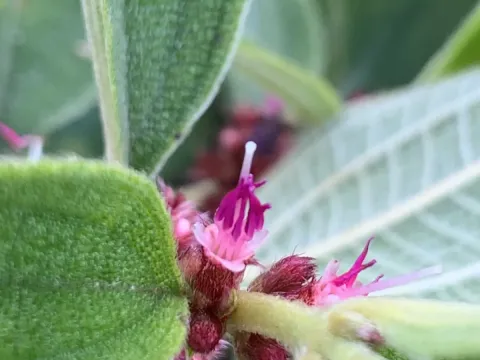
Clidemia rubra
Clidemia rubra
Clidemia rubra is a tropical shrub belonging to the diverse Melastomataceae family. This species originates from the tropical regions of the Americas, where it thrives in humid, shaded forest understories.
What the section contains
Clidemia rubra
Botanically, the plant is recognized by its opposite leaves, which often display distinct longitudinal venation. The stems and leaves are typically covered with fine hairs, serving as a protective mechanism against various environmental stressors found in the native habitat.
The climate requirements are strictly tropical; the plant demands high humidity and constant warm temperatures to flourish. It lacks cold hardiness and must be grown in climate-controlled environments if cultivated outside of its indigenous geographical range.
Soil quality plays a vital role in the health of the plant. Well-draining, slightly acidic substrates are preferred to ensure that the root system receives adequate oxygen while retaining enough moisture for continuous vegetative growth.
Agricultural management involves regular monitoring of soil pH and nutrient levels. Pruning is essential for maintaining the structural integrity of the shrub, especially when managed in greenhouses or controlled cultivation setups.
Pest pressure often includes outbreaks of spider mites and whiteflies, especially in environments where ventilation is inadequate. These insects can quickly colonize the underside of leaves, causing significant physiological stress to the plant.
Fungal pathogens such as root rot and leaf spots present major challenges in cultivation. Maintaining proper air circulation and implementing strict sanitary practices are the primary methods for preventing the spread of these infectious diseases.