
Clidemia
Clidemia
Clidemia, most notably the species Clidemia hirta, is a perennial shrub belonging to the Melastomataceae family. In an agricultural context, it is recognized as a highly aggressive and invasive weed that poses a severe threat to managed landscapes and crop production.
What the section contains

Clidemia
Originally native to the American tropics, the plant has successfully naturalized across various tropical regions globally. It thrives in humid environments and demonstrates remarkable plasticity in its habitat preferences, ranging from full sunlight to dense forest shade.
Soil requirements for Clidemia are largely non-specific, allowing it to rapidly colonize abandoned agricultural lands, pastures, and disturbed soil near roadsides. Once established, it forms impenetrable thickets that exclude all other forms of vegetation.
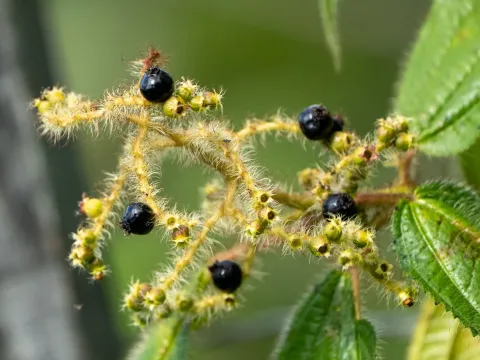
Botanically, Clidemia is characterized by its hairy leaves and prolific production of small, berry-like fruits. These fruits are highly attractive to birds, which act as primary dispersal agents, spreading seeds over vast geographical areas and facilitating rapid colonization.
Effective management requires rigorous agronomic practices, including manual uprooting of seedlings and the use of chemical control methods. Early detection is critical, as allowing the plant to reach the fruiting stage significantly increases the risk of long-term infestation.
As an invasive species, Clidemia does not typically suffer from pests or diseases that would check its growth in a way beneficial to agriculture. Instead, it aggressively outcompetes crops for sunlight, water, and essential soil nutrients, leading to decreased yields.
The primary threat to farming operations is the loss of grazing land productivity and the degradation of perennial crop plantations. Dense stands of Clidemia can render large areas of land unusable, requiring substantial labor and resources for restoration.
Mechanical control measures are common but must be executed with caution. Fragmented parts of the plant can sometimes regenerate, and machinery moving through infested areas must be thoroughly sanitized to prevent the spread of seeds and vegetative propagules.
Quarantine regulations are essential in preventing the introduction of Clidemia into non-infested regions. Strict adherence to inspection protocols for incoming agricultural shipments helps maintain field hygiene and protects local ecosystems from the weed.
Integrated weed management, combining chemical applications with long-term land monitoring, remains the standard approach. While biological control agents have been researched, their widespread application is limited by ecological risks and varying efficacy.