
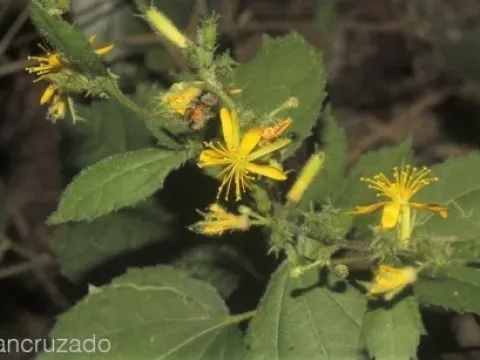
Triumfetta graveolens
Triumfetta graveolens
Sowing of Triumfetta graveolens is performed when soil temperatures are consistently warm, typically at the start of the rainy season.
What the section contains
Triumfetta graveolens
Seeds should be planted at a shallow depth of 1–2 cm to ensure proper germination in warm, moist soil environments.
Adequate spacing, typically around 40–50 cm between rows, is necessary to support robust growth and reduce competition for nutrients.
Seed scarification is often recommended to overcome dormancy and improve the overall percentage of plant emergence in the field.
Establishing a uniform plant stand early in the season is critical for achieving optimal yields at the end of the growth cycle.
Triumfetta graveolens, a member of the Malvaceae family, thrives in tropical climates characterized by high light intensity.
The plant requires well-drained loamy soils with a balanced pH to support the development of a healthy and extensive root system.
Consistent moisture is essential during the active vegetative stage, although the plants do not tolerate prolonged waterlogging.
Temperatures ranging from 22°C to 30°C are considered ideal for promoting vigorous biomass accumulation and fiber development.
Organic inputs can significantly improve growth performance, especially in soils that require enhanced structure and nutrient availability.
The yield of this crop is measured by the quality and quantity of bast fiber extracted from the mature stems of the plant.
Proper agronomic management during the growing season directly correlates with a higher volume of harvestable fiber material.
This crop serves as a valuable resource for local industries, providing material for cordage and various textile applications.
Beyond fiber, the plant biomass contributes to soil health when returned to the land through sustainable management practices.
Efficient processing of the stems allows for the maximum extraction of fibers while maintaining their natural strength and elasticity.
The crop is susceptible to common pests such as aphids and leaf-eating larvae, which require close monitoring for effective control.
Fungal diseases related to moisture excess can damage roots, emphasizing the importance of selecting sites with excellent drainage.
Weed management during the early growth stages is essential to ensure that the crop is not overtaken by competing invasive species.
Implementing a proper crop rotation strategy helps mitigate the buildup of soil-borne pathogens and pests over multiple seasons.
Early identification of physiological disorders allows for prompt corrective actions, preserving the integrity of the plant stand.
Harvesting is typically scheduled during the peak flowering stage to optimize the fiber quality before stems become too woody.
The stems are cut near the base and subjected to a retting process to separate the fibers from the non-fibrous plant tissues.
Post-harvest processing involves washing and drying the fibers to ensure long-term stability and quality for end-product usage.
Natural air-drying of the fibers in shaded conditions prevents degradation and preserves the structural characteristics of the raw material.
Stored fiber should be kept in dry conditions to prevent mold growth and maintain its industrial quality until processing occurs.