
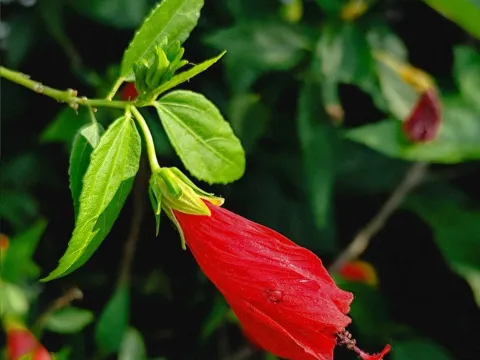
Sleeping hibiscus
Malvaviscus penduliflorus
Sleeping hibiscus (Malvaviscus penduliflorus) is a shrubby plant belonging to the Malvaceae family. Native to tropical regions of Central and South America, it is widely appreciated for its unique flower morphology.
What the section contains
Sleeping hibiscus
The plant thrives in bright, indirect light but can tolerate partial shade in hot climates. It requires consistent warmth, as it is frost-sensitive and should be kept in protected environments during winter months.
A well-draining, nutrient-rich soil is essential for the healthy development of this species. It prefers a slightly acidic to neutral pH level, which encourages vibrant foliage and prolific flowering.
The flowers of this plant are distinctively tubular, bright red, and remain closed, appearing as if they are perpetually budding. These blossoms are a vital nectar source for hummingbirds in the wild.
Cultivation involves regular watering during the active growth period, ensuring the soil remains moist but not waterlogged. Pruning is recommended to maintain the desired shape and encourage new growth.
Spider mites are the most prevalent pests affecting Sleeping hibiscus, particularly when grown indoors in dry, heated air. Frequent misting can help deter these insects.
Whiteflies and aphids can also colonize the plant, causing yellowing of the leaves and stunted growth. Integrated pest management, including systemic insecticides, is often required.
Fungal issues such as leaf spot or powdery mildew may arise if humidity is too high and air circulation is insufficient. Improving ventilation is key to preventing these outbreaks.
Root rot is a critical threat typically caused by excessive irrigation or poor drainage in containers. It is essential to ensure that excess water can escape freely from the pot.
General plant vigor can be improved through regular monitoring for signs of stress or deficiency. Providing balanced fertilizers during the growing season helps the plant resist common diseases.