
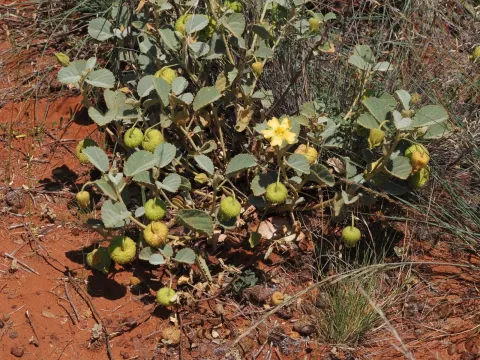
Sida platycalyx
Sida platycalyx
Sida platycalyx is a perennial herbaceous plant belonging to the Malvaceae family. It is recognized for its robust growth habit and ability to produce high yields of lignocellulosic biomass suitable for various industrial applications.
What the section contains
Sida platycalyx
The sowing process should take place in spring once soil temperatures are consistently above 10-12 degrees Celsius. This ensures optimal germination conditions and establishes a strong root system before the heat of summer.
Seeds are sown in rows with spacing maintained between 45 and 60 cm to allow for sufficient plant development and weed control. Uniform seeding depth of 2-3 cm is recommended for consistent emergence.
During the establishment phase in the first year, Sida focuses energy on underground biomass development. Regular weed management is essential during this period to prevent competition for resources.
Proper soil preparation, including loosening and leveling, is crucial for achieving high plant density. Firming the soil after sowing improves moisture contact, significantly increasing the probability of successful crop establishment.
Sida platycalyx is highly adaptable to diverse soil types, including sandy loams and heavier clay soils. Its deep root system makes it particularly drought-tolerant compared to traditional forage or energy crops.
The plant thrives in full sun conditions, which are necessary for maximum photosynthetic efficiency and biomass accumulation. Shaded environments will result in decreased height and lower total yield.
In terms of moisture, while it tolerates dry spells, moderate rainfall during the vegetative growth phase enhances the biomass quality. It cannot tolerate waterlogged soils, which may induce root rot.
Temperature requirements are moderate; the plant is hardy and can survive freezing winters in temperate regions. It remains dormant during the cold months, sprouting again in early spring.
Nutrient requirements are relatively low, making it a sustainable choice for marginal lands. However, small applications of nitrogen can boost yields significantly in highly depleted soil conditions.
The primary use of Sida platycalyx is the production of solid biofuel. Its stems have an excellent composition for pellet and briquette manufacturing due to their high cellulose content.
Annual yields of dry biomass can reach up to 15 metric tons per hectare under favorable management practices. The crop remains productive for several years, reducing the need for frequent replanting.
Beyond biofuels, the biomass serves as a valuable resource for the pulp and paper industry. It is being explored as a feedstock for bio-based chemicals and advanced material production.
The plant also serves as an important late-season melliferous species, providing a valuable source of nectar for honey bees, which adds secondary value to agricultural lands.
Soil improvement is another key benefit. The root system contributes significantly to soil organic matter accumulation and physical structure improvement, mitigating erosion on slopes.
Sida platycalyx is naturally resilient to many pests and diseases, which distinguishes it as a low-input crop. It rarely requires synthetic pesticide applications during the main growth stages.
Potential threats include early-stage weed competition, which can be easily managed through mechanical inter-row cultivation. Once the canopy closes, the crop effectively suppresses most invasive weeds.
Fungal issues such as leaf spot or stem rot are uncommon and generally do not reach economic threshold levels unless the crop is planted in poorly drained, swampy areas.
Insect pests are typically transient and do not cause significant damage. Monitoring should focus on preventing the spread of common insects that could weaken the stems during dry spells.
Adhering to certified seed sources and maintaining good field hygiene helps prevent the introduction of soil-borne pathogens, ensuring the long-term health of the perennial plantation.
Harvesting is typically carried out once a year in late autumn or early spring. At this stage, the plant is senescent, and moisture content in the stems is at its lowest, reducing drying costs.
Standard forage harvesting equipment, such as stalk choppers or balers, is used to cut and bundle the biomass. The machinery should be set to a low cutting height to capture maximum yield.
The harvested material should be stored in ventilated areas or under covers to prevent moisture re-absorption, which is critical for maintaining high calorific value and preventing fungal growth.
Efficiency in logistics is paramount, as the bulkiness of the biomass requires optimized transport paths from the field to the processing facility or storage site.
Regular maintenance of the plantation after harvest, such as removing debris and ensuring the field remains level, supports the vigor of the plant for the following season's growth cycle.