
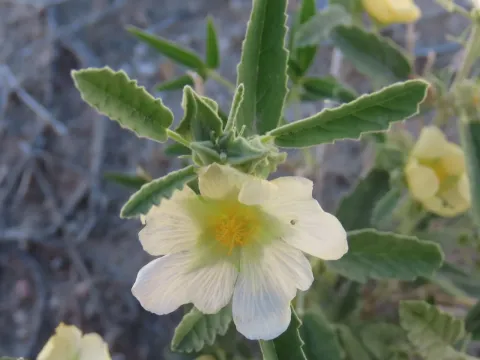
Sida ovata
Sida ovata
Sowing Sida ovata should be performed once the soil has warmed up sufficiently, typically in late spring, to ensure rapid and uniform emergence of seedlings. Protecting the crops from late frosts is critical for initial growth stages.
What the section contains
Sida ovata
Seeds should be planted at a depth of 1 to 2 centimeters. Maintaining good soil-to-seed contact is essential to facilitate moisture absorption and trigger the germination process effectively.
Planting density depends on the intended end-use of the crop. Higher density is recommended for fiber production, as it encourages the development of straight, elongated stems, which are ideal for industrial processing.
Seed treatment, such as cleaning and grading, is highly recommended to improve sowing precision and overall emergence rates. In semi-arid regions, providing light irrigation immediately after planting can significantly improve stand establishment.
As a member of the Malvaceae family, Sida ovata exhibits vigorous early growth, typically showing sprouts within a week to ten days under favorable temperature and moisture conditions.
Sida ovata is a thermophilic plant adapted to tropical and subtropical climates. It is highly valued for its drought tolerance, making it a robust option for areas facing water scarcity.
The crop thrives in well-drained, fertile soil types, ranging from sandy loams to heavier loams. It is vital to avoid sites prone to waterlogging, as the root system is susceptible to fungal rots in anaerobic conditions.
Adequate sunlight exposure is a primary requirement for optimal biomass production. Shaded environments negatively impact plant architecture, leading to elongated but weaker stems that lack the desired quality for industrial applications.
The optimal soil pH range for Sida ovata is between 6.0 and 7.5. The crop also demonstrates a surprising degree of tolerance to saline soil conditions, broadening its potential cultivation area.
Strategic application of nitrogen fertilizers during the early vegetative phase helps boost foliage and stem volume. However, growers should avoid excessive fertilizer inputs to prevent lodging during periods of rapid stem elongation.
Yield performance in Sida ovata is highly responsive to favorable soil moisture levels and consistent management practices. Under optimal conditions, the crop can generate a substantial amount of biomass in a single growing cycle.
When grown for fiber, the stem weight and cellulose content are the key metrics for yield assessment. Efficient production systems focus on maximizing these parameters to ensure commercial viability.
In a forage context, Sida ovata provides a sustainable feed option for livestock. With sufficient irrigation, the crop can support multiple harvests per season, ensuring a continuous supply of fodder.
Seed yield is generally reliable, allowing farms to become self-sufficient in seed stocks. Timely harvesting is required, however, as seeds tend to shatter once the seed pods reach full maturity.
Furthermore, Sida ovata serves as an excellent nectar source for pollinators, contributing to the health of the local agroecosystem and potentially increasing the yield of adjacent crops through enhanced pollination.
Fungal diseases, such as leaf spot and various root rots, pose the most significant threat to Sida ovata, especially in environments with high humidity and stagnant air circulation within the canopy.
Common insect pests include weevils and various aphid species. These pests target succulent tissues, significantly reducing biomass accumulation and compromising the mechanical properties of the fiber.
Weed pressure is a major concern during the early vegetative growth phase. Implementing effective weed control strategies, such as mechanical inter-row cultivation, is crucial until the canopy closes to suppress competitor plants.
Integrated Pest Management (IPM) practices, including crop rotation and maintaining optimal planting density, are recommended to minimize the risk of disease outbreaks and insect infestations.
Regular field scouting is essential to identify early symptoms of pathology or pest pressure. Early detection allows for targeted interventions, reducing the need for broad-spectrum chemical applications.
For fiber production, harvesting should occur at the onset of flowering. This stage ensures the best balance between stem yield and fiber quality, as the stalks are strong, flexible, and rich in high-quality cellulose.
When used for fodder, harvesting must be completed before the stems become overly lignified. Cutting the crop at the succulent stage ensures maximum nutritional intake and digestibility for livestock.
Mechanized harvesting with forage harvesters or specialized mowing equipment is the standard for large-scale operations. Setting the correct cutting height is essential to preserve the base of the plant for potential regrowth.
Harvested biomass requires immediate processing or drying. Delays in handling the cut crop can lead to rapid quality degradation, including loss of fiber elasticity and reduction in the nutritional value of the forage.
Seed harvesting should be timed carefully once the seed pods turn brown and start to dry out. Following harvest, the seeds require proper cleaning and moisture adjustment to ensure long-term viability during storage.