
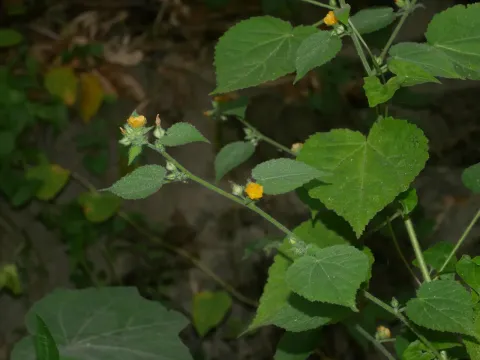
Sida mysorensis
Sida mysorensis
Sida mysorensis is a perennial herb or subshrub belonging to the Malvaceae family. Native to tropical regions of Asia, specifically India and surrounding territories, it thrives in warm, humid climates where seasonal growth is uninterrupted by frost.
What the section contains
Sida mysorensis
The plant features cordate (heart-shaped) leaves and small yellow flowers, typical of many Malvaceae species. Its stalks are particularly noted for their structural strength, composed of high-quality fibers that have potential utility in industrial applications.
Cultivation requirements focus on well-drained, nutrient-rich soils. The plant performs best in loamy substrates with a near-neutral pH balance. Adequate moisture is essential during the vegetative stage, though the plant is sensitive to waterlogging, which can cause root rot.
Regarding climate, Sida mysorensis requires significant exposure to sunlight. While it can adapt to partial shade during the early development stage, full sun is necessary for the plant to achieve its maximum potential biomass and flower development.
In terms of agricultural use, Sida mysorensis is primarily researched for its fiber quality and traditional medicinal properties. It represents a niche crop with potential for sustainable fiber production, provided the environmental conditions match its native tropical habitat.
Pests such as leaf miners and various species of aphids are the primary threats to Sida mysorensis. These insects can significantly stunt growth by damaging leaves and draining plant sap, necessitating integrated pest management strategies.
Fungal pathogens represent a major risk, particularly under conditions of high humidity and poor air circulation. Anthracnose and leaf spot diseases can spread rapidly in dense stands, requiring strict monitoring and the use of preventative fungicide applications.
Nematode infestation is a potential concern when the crop is planted in light, sandy soil textures. Using crop rotation with non-host species is the most effective way to manage soil-borne pathogen populations and ensure long-term field productivity.
Virus-related disorders, often transmitted by whiteflies, manifest as mosaic patterns on foliage. Control measures focus on vector management and the immediate removal of symptomatic plants to prevent large-scale spread across the plantation.
Soil nutrient imbalances can also increase the susceptibility of Sida mysorensis to various diseases. Ensuring a balanced fertilization program that includes necessary macro and micronutrients helps maintain robust health and natural resistance in the plants.